
Quick answer
What is the difference between clearing and cleaning a sewer line?
Clearing (snaking) punches a hole through the blockage so water flows again. Cleaning removes roots, grease and scale from the whole pipe wall, typically by jetting at 4000 PSI, so the line flows at full diameter and the clog is less likely to come back.
Clearing a drain vs. cleaning it
Most drain calls end when the water starts moving. A cable bores a hole through the middle of the blockage, the sink drains, and everyone moves on. But most of the buildup is still stuck to the pipe wall. Grease catches on what's left, the opening narrows again, and that's why the same clog keeps coming back.
Sewer line cleaning goes further. We remove grease, sludge, scale and roots from the full circumference of the pipe so the line is back to its original diameter. The main tool is high pressure water jetting at 4000 PSI at 9 GPM; old cast iron with heavy scale gets carbide chain descaling.
Signs your line needs a full cleaning
- The same clog comes back every few weeks or months
- Drains throughout the house are slow, not just one fixture
- Gurgling when other fixtures drain
- A line that was snaked recently and is already slowing down
- Camera footage showing grease, sludge or scale along the pipe wall
How we clean a sewer line
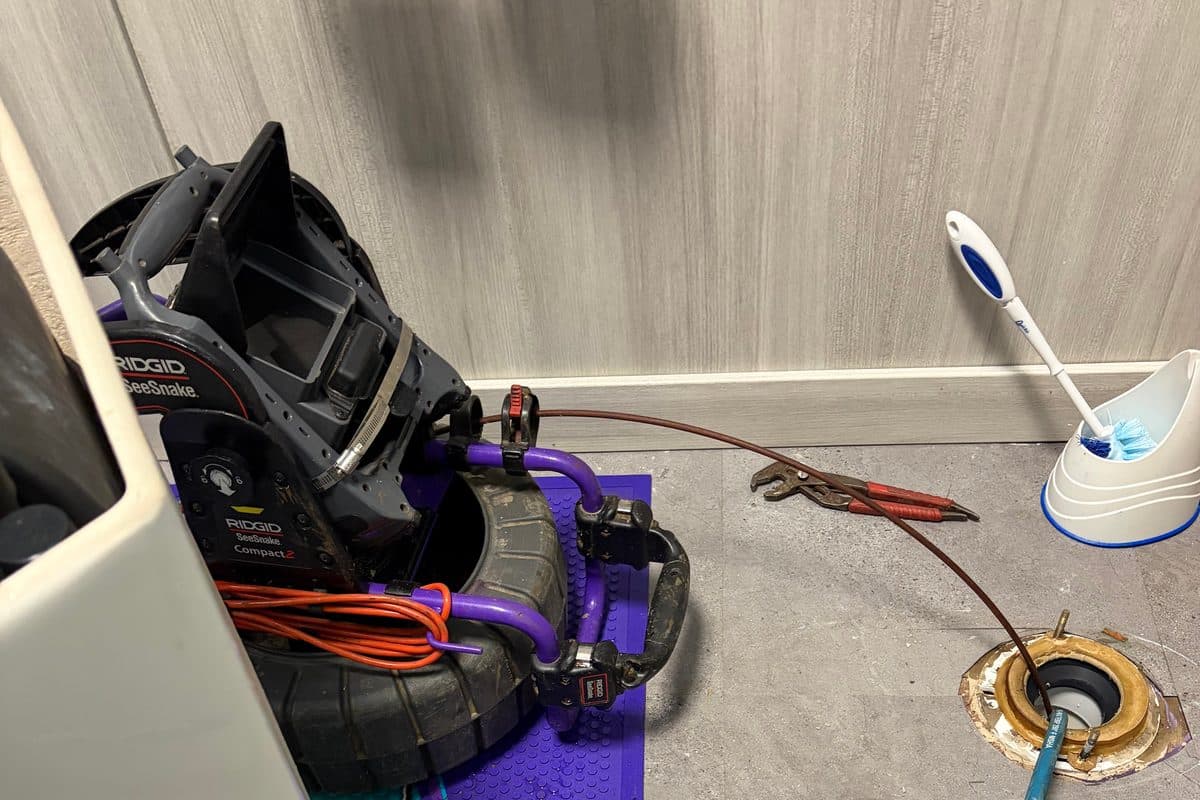
Camera first
We look at the line to see what's on the walls and confirm the pipe is sound enough to clean.
Match the method to the buildup
Grease, sludge and roots get jetted. Heavy scale in old cast iron gets descaled with a carbide chain.
Clean wall to wall
We work the full length of the line, scouring the whole circumference and flushing the debris out.
Show you the after
A camera run after cleaning shows the restored pipe, and you see the before and after footage side by side.
Why Long Island lines get dirty
Kitchen grease cools and sticks to the pipe wall. Older cast iron, common in homes built before the 1970s, rusts from the inside and the scale catches grease and paper. Mature trees send roots into joints, and sandy soil settles and creates bellies where waste collects.
Cleaning fixes buildup. It doesn't fix a belly or a broken pipe, and if the camera shows one we tell you, because no amount of cleaning will fix a pipe that's sagging or broken.
What you get
- Before and after camera footage
- Grease, sludge, scale and roots removed from the pipe wall
- Sound pipe restored to its full diameter
- An honest call on any defects cleaning can't fix
- A recommended maintenance interval