Quick answer
What is hydro jetting?
Hydro jetting cleans a drain or sewer line with high-pressure water. Quick Drain’s jetter runs 4000 PSI at 9 GPM, cutting roots and scouring grease from the full pipe wall instead of punching a hole through the clog, so the line drains like it was designed to.
What hydro jetting is
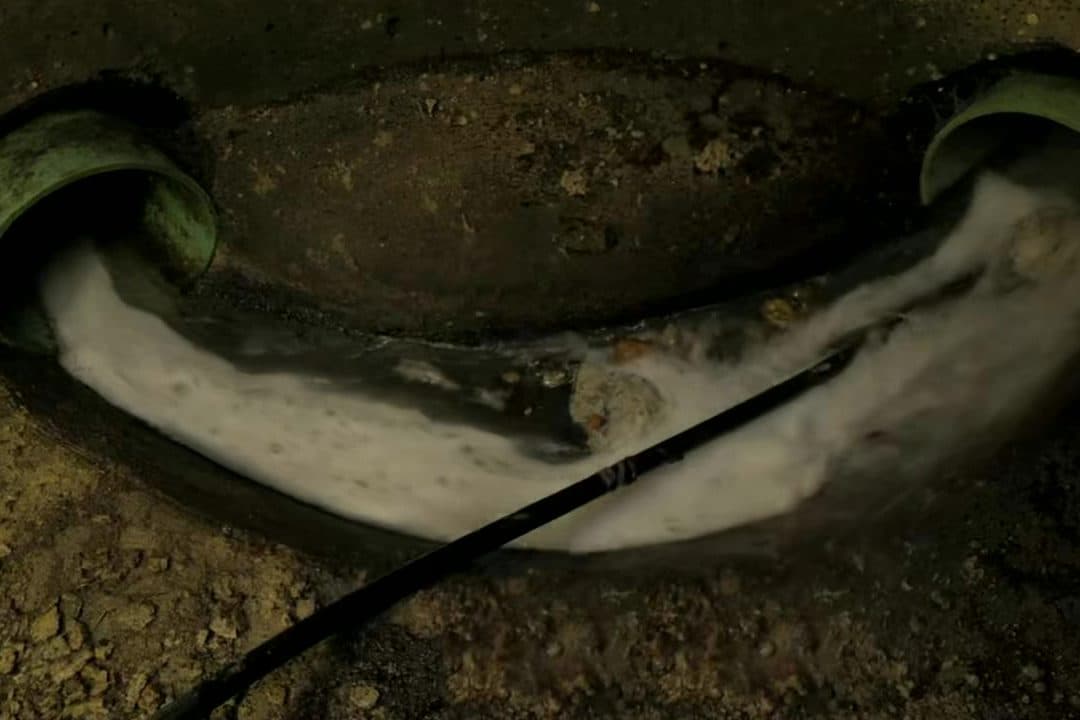
A jetter pumps water through a high pressure hose to a nozzle that travels down the line. Rear-facing jets pull the hose forward and blast the pipe wall as it goes, so grease, sludge, scale and roots are scoured off and flushed downstream. Our jetter runs at 4000 PSI at 9 GPM: the pressure does the cutting, and the flow carries the debris away.
That's the difference between clearing a drain and cleaning it. A snake bores a hole through the middle of a clog. Water moves again, but most of the buildup is still stuck to the pipe wall and the opening narrows again. Jetting restores the pipe to its original diameter, which is why a jetted line stays clear much longer.
When jetting is the right fix
- A kitchen sink that keeps backing up because of grease
- Roots in the line that come back after snaking
- Restaurant and commercial grease lines
- Apartment building stacks and shared lines
- The same line clogging again and again
- Preventative maintenance on a line with a known root or grease problem
How we jet a line
Camera first
We look before we jet. The camera confirms the problem is grease, roots or scale, and that the pipe is sound enough to jet. Fragile pipe like Orangeburg, or a collapsed section, needs a different plan.
Match the nozzle to the job
Cutting roots at a joint, scouring grease along the wall and breaking through a hard blockage are different jobs, so the nozzle is matched to what's in the pipe.
Jet the full line
We work the nozzle through the line at 4000 PSI at 9 GPM, scouring the full circumference and flushing the debris downstream.
Camera after
A second camera run shows the cleaned pipe. You see the after footage, and we tell you how often that line is likely to need it again.
Roots, grease and Long Island pipe
Long Island's mature trees send roots into joints looking for water. They grow back after snaking unless the line is jetted and maintained. Kitchen lines narrow as grease cools and sticks to the pipe wall; snaking opens a channel, but the grease stays and catches more.
Older cast iron has its own problem: rust scale that narrows the pipe from the inside. Light scale jets clean. Heavy tuberculation in old cast iron is a job for carbide chain descaling.
What you get
- Before and after camera footage
- Pipe walls scoured back to full diameter, not just a hole through the clog
- A recommended maintenance interval based on what the camera showed
- The option to put the line on a Quick Guard preventative jetting schedule