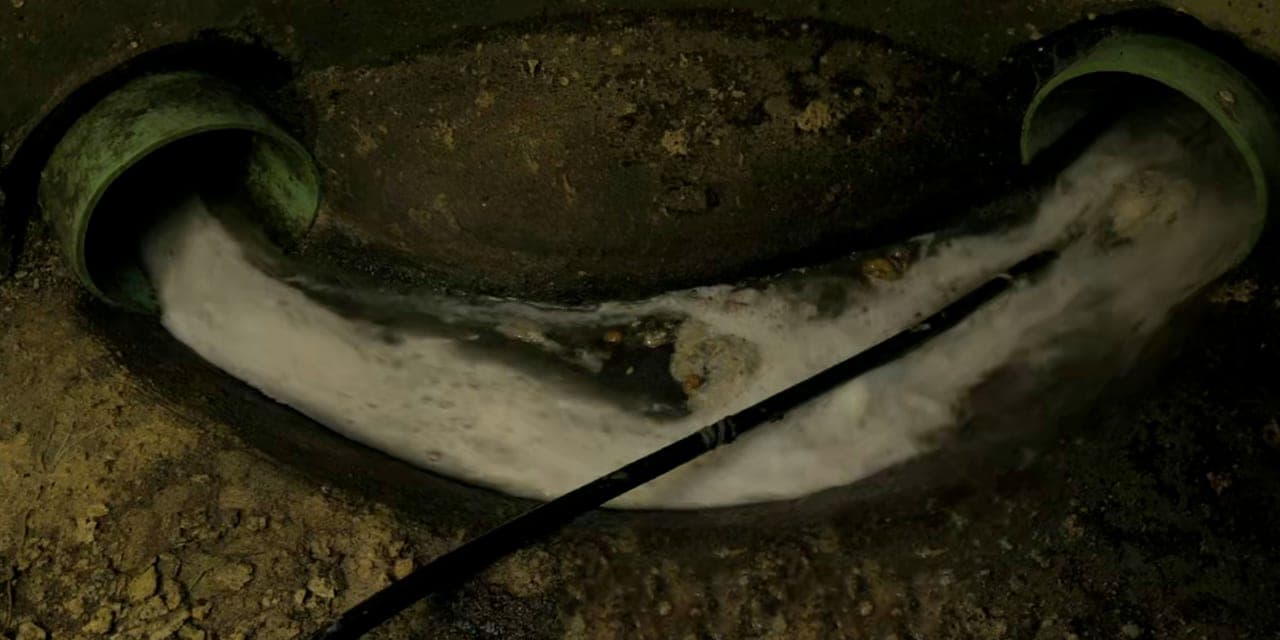
When a drain stops, most people get one of two answers: “we’ll snake it” or “you need hydro jetting.” Both can be right. They are different tools that do different jobs, and picking the wrong one is how a homeowner ends up paying for the same clog three times in a year. The honest answer depends on what is actually inside the pipe, which is why we look before we pick.
What snaking actually does
A drain snake (a cable machine, or auger) spins a steel cable with a cutting head down the line. The head bores a path through the blockage so water can move again. It is quick, it works from a cleanout, a drain opening or a pulled toilet, and it is often the fastest way to get a backed-up house draining.
- Good for: a single soft stoppage like paper or a wad of wipes, a sink or tub branch line, and getting an emergency backup moving so the house can drain.
- Not good for: grease coating the pipe wall, roots that grow back, or scale inside old cast iron. The cutting head is smaller than the pipe, so it leaves most of that buildup behind.
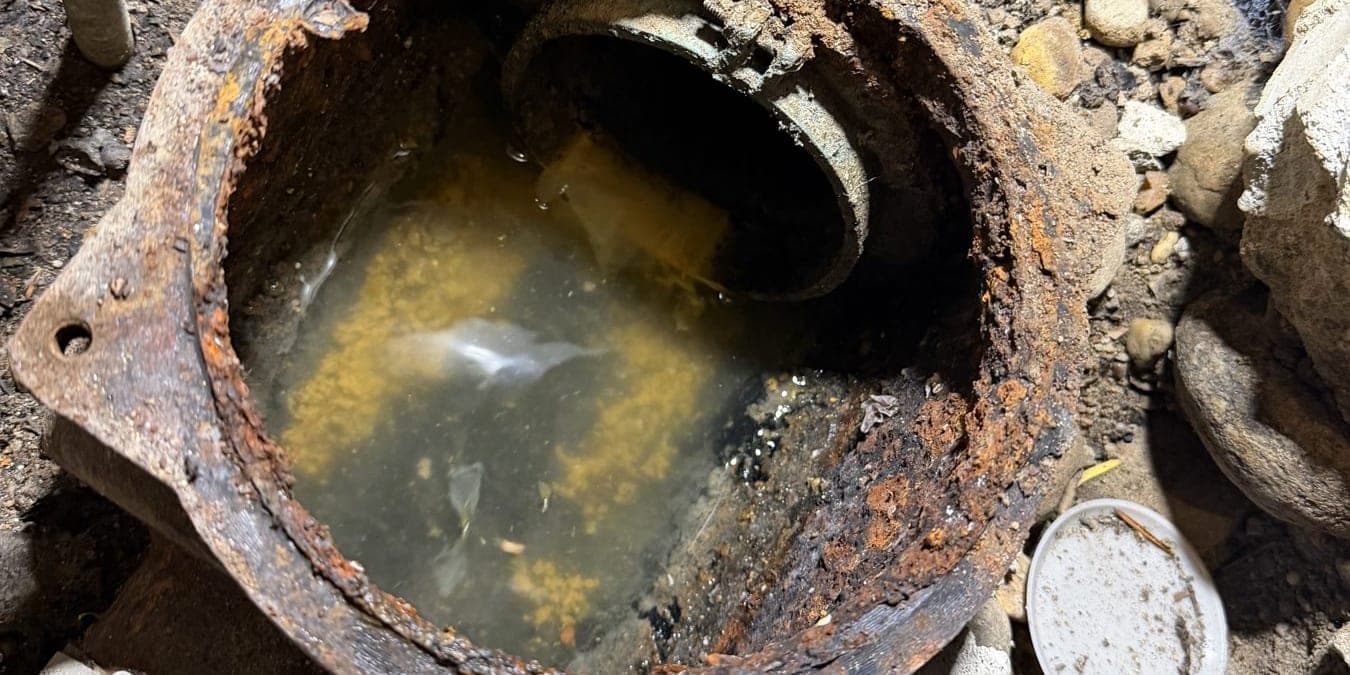
That leftover buildup is the catch. Grease, scale and root fibers stay stuck to the pipe wall, the next load of paper catches on them, and the opening narrows again. That is why a line that was “just snaked” is so often slow again a few weeks or months later.
What hydro jetting does
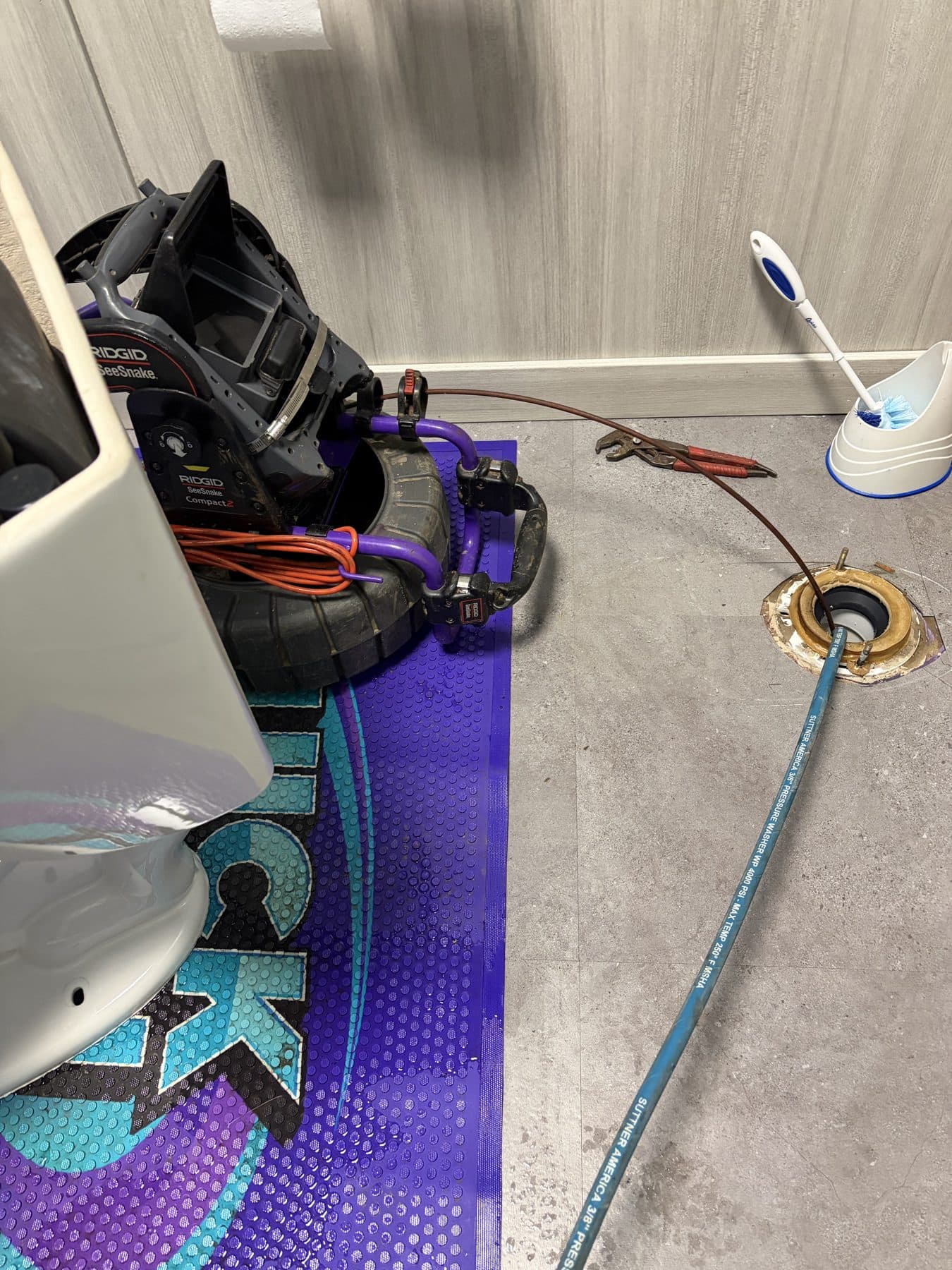
A jetter pumps water through a high pressure hose to a nozzle that travels up the line. Rear-facing jets pull the hose forward and blast the full circumference of the pipe as it goes. Our jetter runs at 4000 PSI at 9 GPM: the pressure does the cutting and scouring, and the flow carries the loosened grease, sludge and roots downstream and out of the line.
- Good for: kitchen lines narrowed by grease, roots cut back at the joints, sludge and soap buildup, restaurant and apartment building lines, and any line that keeps clogging after it was snaked.
- The result: the pipe back toward its original diameter, not just a hole through the middle. A cleaned line stays clear far longer than a snaked one.
If you want to see the difference, our clearing vs. cleaning animation steps through it: blocked, snaked, still dirty, jet cleaned.
Snaking vs. jetting, side by side
| Compared | Snaking | Hydro jetting |
|---|---|---|
| What it does | Bores a path through the clog | Scours the whole pipe wall and flushes it |
| Best for | Soft stoppages, branch lines, getting an emergency moving | Grease, roots, sludge, repeat clogs, commercial lines |
| What it leaves behind | Most of the buildup on the walls | A clean pipe, close to full diameter |
| How long it lasts | Until the buildup catches the next clog | Much longer; roots and grease return slowly |
| Before we use it | A look at the symptoms | A camera check that the pipe is sound |
Why the camera decides, not the price
You can’t choose the right tool without knowing what is in the pipe. On a diagnostics-first visit the camera goes in first, and the 512 Hz sonde behind the camera head lets us mark exactly where a problem sits and how deep it is. Then the footage picks the method. (We wrote about why diagnosis beats blind snaking in more detail.)
- Grease along the wall: jetting. Snaking would leave it behind.
- Roots at a joint: jetting cuts them back to the pipe wall, then a maintenance schedule keeps them in check. If the joint is broken, the camera shows it. More in tree roots in your sewer line.
- Heavy scale in old cast iron: water removes light scale, but hard tuberculation takes carbide chain descaling. See descale, line or replace?
- A belly holding standing water: neither tool fixes a sag. It is a repair decision, not a cleaning one.
- A cracked, collapsed or separated section: no jetting. The pipe needs a repair first.
When jetting is the wrong call
High pressure is safe on sound pipe. It is not safe on pipe that is already failing. Orangeburg (a tar-and-wood-fiber pipe used from the 1940s to the 1960s) softens and deforms with age; badly cracked clay, a collapsed section or joints that have pulled apart can all get worse under a jetter. That is exactly why we run the camera before we jet, and why a contractor who wants to jet your line without looking at it is guessing with your pipe.
What changes on Long Island
The usual Long Island suspects each point to a different tool. Mature trees send roots into the joints of older laterals. Homes built before the 1970s often still have cast iron that scales from the inside. Sandy soil settles and creates bellies and offset joints where waste collects. And kitchen grease is the same everywhere.
One more thing is very Suffolk County: most homes here aren’t on public sewer. If your house drains to a cesspool or septic system, slow drains all over the house can be the system itself, full or failing, rather than a clog in the pipe. Jetting the line won’t fix a full cesspool. The camera run tells us which one it is, and a septic and cesspool inspection covers the system. Not sure what you have? Start with cesspool, septic or sewer?
Grease and wipes are hard on a cesspool or septic system as well as on the pipe. The US EPA’s septic system guidance covers what not to send down the drain if your home isn’t on sewer.
What a jetting visit looks like
- Camera first. We look at the line to confirm the problem is grease, roots or scale, and that the pipe is sound enough to jet.
- Match the nozzle to the job. Cutting roots at a joint, scouring grease off the wall and breaking through a hard blockage call for different nozzles.
- Jet the full line. The nozzle works its way through at 4000 PSI, scouring the whole circumference and flushing the debris downstream.
- Camera after. A second run shows the cleaned pipe. You see the before and after footage, and we tell you how soon that line is likely to need it again.
How often should a line be jetted?
For most homes with a known root or grease problem, every 1 to 3 years keeps the line clear. Restaurants often need it every 3 to 6 months. The right interval comes from the footage, not a calendar: we look at how much came back since the last cleaning and set the schedule from that. Preventative jetting is part of the Quick Guard membership.
The bottom line
A snake gets water moving. A jetter cleans the pipe. A camera tells you which one your line needs, or whether it needs a repair instead. If the same drain has clogged more than once this year, it needs more than another snaking: it needs someone to look.
Questions we get
Is hydro jetting better than snaking?
For cleaning a line, yes: jetting scours the whole pipe wall, while a snake only bores a path through the clog. For a quick opening in an emergency, or a soft stoppage near a fixture, a snake can be the right tool. The camera shows which one your line needs.
Can hydro jetting damage my pipes?
Not sound pipe, which is why we run the camera first. Orangeburg pipe, badly cracked clay or a collapsed section can be damaged by high pressure, so those lines get a different plan.
Does hydro jetting get rid of tree roots?
It cuts roots back to the pipe wall and flushes them out, but roots grow back where they got in. A maintenance schedule keeps them in check, and the camera shows whether the joint they come through needs a repair.
How much does hydro jetting cost?
It depends on the line, how we can get to it and what is in it. Our emergency cost calculator gives a likely range in a few steps. The camera sets the final price, and you approve it before we start.