Many Long Island homes built before the 1970s still drain through their original cast iron. It’s strong, quiet and was built to last, and plenty of it is still working. But cast iron rusts from the inside, and by the time a line has been in the ground for fifty or sixty years, the question isn’t whether it is old. It is how much good pipe wall is left, and what the honest fix is.
How cast iron fails
Cast iron often lasts 50 to 75 years, but it doesn’t fail all at once. It wears in a few predictable ways:
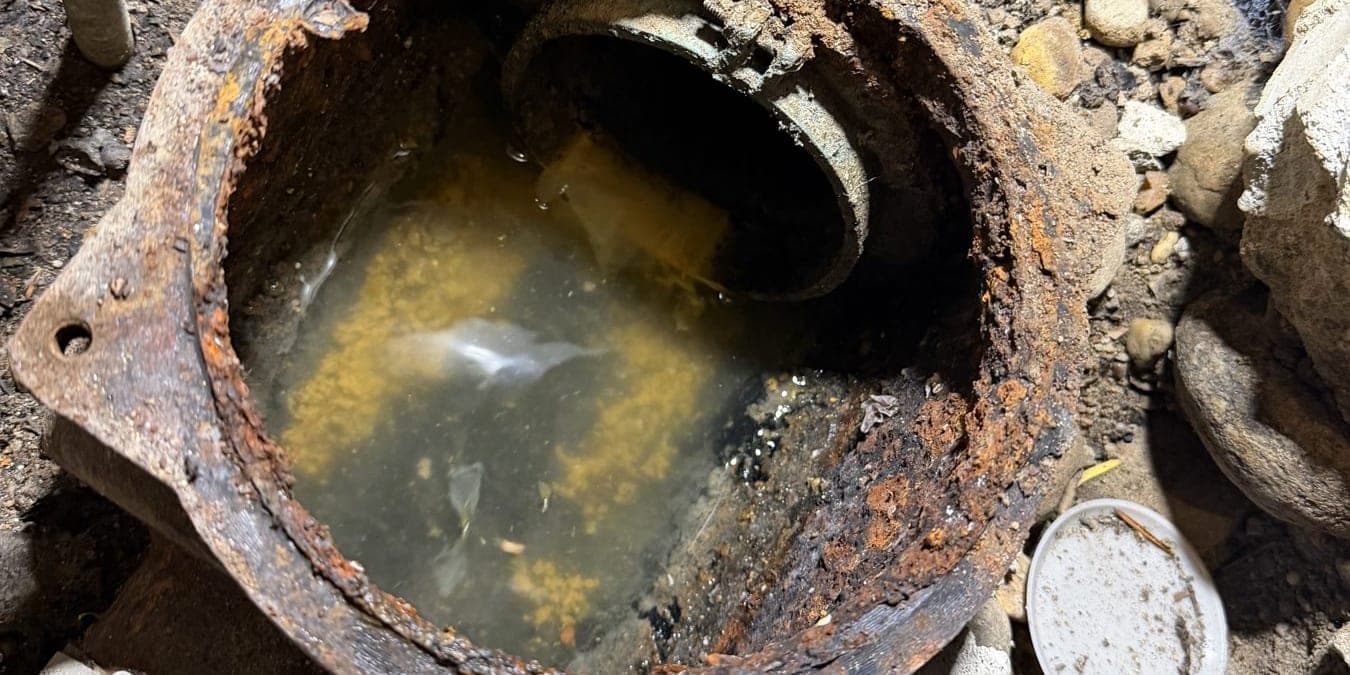
- Scale and tuberculation. Rust builds into hard, lumpy scale on the inside of the pipe. It narrows the opening and gives paper and grease something to catch on, so clogs come back no matter how often the line is snaked.
- Channeling. Water runs along the bottom of a horizontal pipe for decades, and that strip of the wall wears thinnest. In bad cases it cracks or opens along its length.
- Cracks and holes. Thin spots eventually crack, especially where the pipe carries weight or the ground has settled.
- Tired joints. Older cast iron hubs were packed by hand, and as the packing breaks down, joints can weep or let roots in.
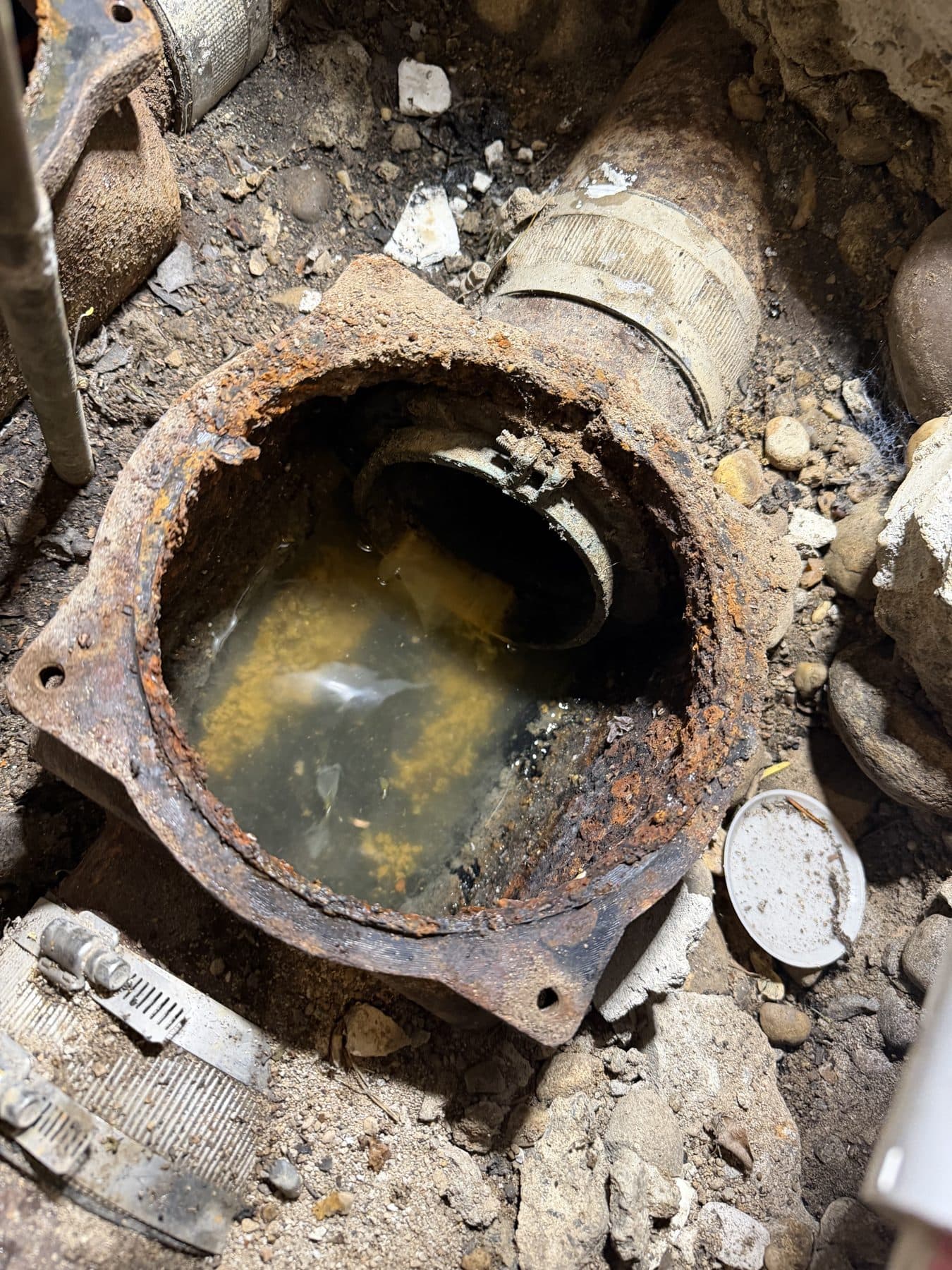
Signs your cast iron needs attention
- Slow drains all over the house that keep coming back after they are cleared.
- Clogs in the same stretch of pipe again and again.
- Rust stains, damp spots or weeping joints on exposed pipe in the basement.
- Sewage odor in the basement with no obvious cause.
- A home built before the 1970s with its original drains and no record of the line ever being inspected.
Not sure whether what you’re seeing is the pipe or something else? The symptom checker and Diagnose my drain walk through the likely causes. If the line is backed up right now, the emergency cost calculator gives a likely range for clearing it; descaling, lining and replacement are priced from the camera footage, and you approve the price before any work starts.
Step one: a camera, not a guess
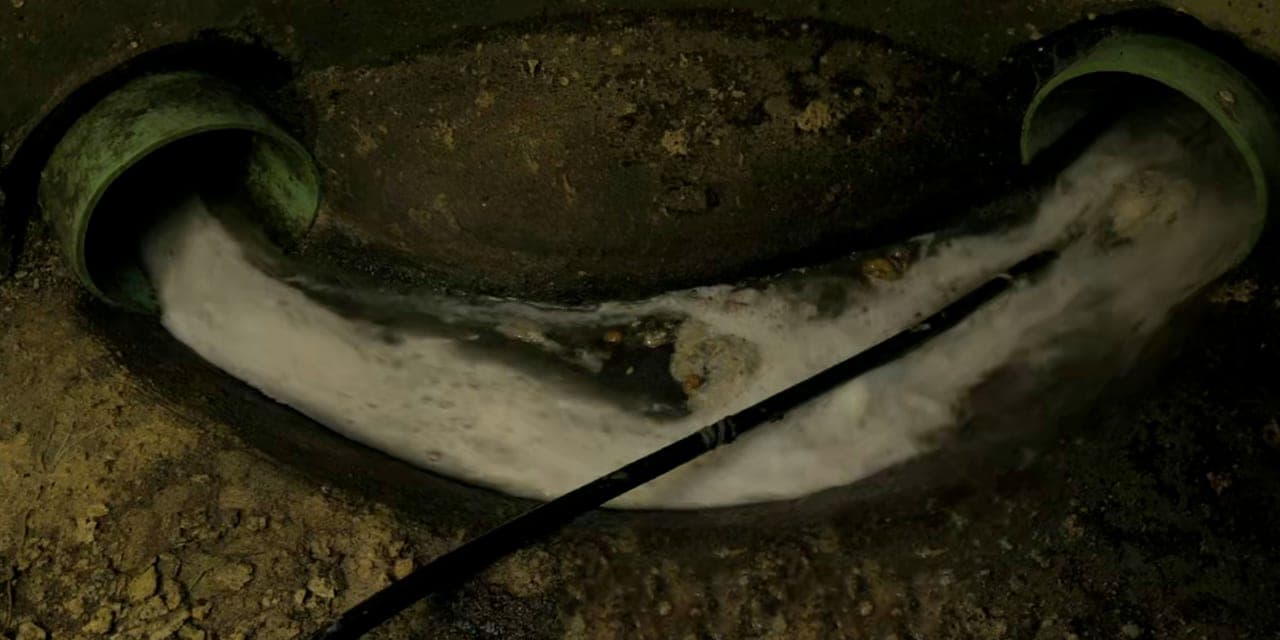
Every one of the options below depends on the condition of the pipe, and you can’t see that from a basement. A sewer camera inspection shows how much scale there is, whether the wall is cracked or channeled, and where the cast iron changes to another material. The 512 Hz sonde lets us mark each problem spot, and its depth, from above. You get the footage; it’s yours to keep and to show anyone else who quotes the job. Here’s what else the camera shows.
Option 1: Descaling
Pipe descaling cuts the scale away. A carbide-tipped chain spins on a flexible shaft inside the pipe, knocks tuberculation off the wall section by section, and the loosened scale is flushed out of the line. A second camera run shows the cleaned pipe. Because the work is done from inside, through existing access points, there is no digging and no broken concrete.
- When it makes sense: the pipe still has a sound wall, and scale is the main problem. It is especially worth it for cast iron under a slab, where replacing it means breaking the floor.
- What it can’t do: add wall thickness, close a crack or rebuild a channeled bottom. If the camera shows the pipe is too far gone, we tell you so instead of descaling a pipe that won’t last.
Can’t you just jet the scale out? Water jetting handles grease, sludge and light scale, but heavy tuberculation is bonded to the pipe and takes the chain. The two work together: the chain cuts, the water flushes. More on that in hydro jetting vs. snaking.
Option 2: Lining
Lining (often called cured-in-place pipe, or CIPP) builds a new pipe inside the old one. After the line is cleaned and descaled, a flexible liner soaked in resin is installed inside the old pipe and cured until it hardens. It seals cracks and joints without digging up the whole run.
- When it can work: the old pipe is cleaned down to its wall, still holds its shape, and the damage is cracks, weeping joints or roots rather than missing or collapsed sections.
- What to ask about: the liner makes the opening slightly smaller; branch connections have to be reopened after it cures; and a collapsed or badly out-of-round section usually has to be repaired before a liner can go in.
- Ask for the footage: before-and-after camera video of the lined pipe, from whoever does the work.
Option 3: Replacement
Sometimes the honest answer is new pipe. Replacement makes sense when the camera shows holes, long cracks, severe channeling, a collapsed section, or pipe that keeps failing. It is also worth considering when walls or floors are already open for a renovation. New drain lines today are usually plastic (PVC). Under a slab it means opening the floor; outside it means excavation, and before anyone digs, call 811 so the utility lines get marked first (call811.com).
Making the call
| What the camera shows | Usually the honest answer |
|---|---|
| Scale and tuberculation, wall intact | Descaling, then a camera check every few years |
| Scale plus small cracks or weeping joints, pipe still round | Descaling first, then ask whether lining fits |
| Channeling, holes or pipe out of round | Repair or replace that section |
| A collapsed section | Repair it; no cleaning method fixes a collapse |
| Cast iron inside, clay or Orangeburg outside | Treat each section on its own; Orangeburg usually needs replacing |
What’s different about Long Island homes
A lot of older homes here have cast iron inside the house and something else outside: clay, or Orangeburg (the tar-and-wood-fiber pipe used from the 1940s to the 1960s, which deforms and collapses with age). The camera shows where one material ends and the next begins, so each section gets the right treatment instead of one fix for the whole line.
Sandy soil settles, which can sag or offset old joints, and much of the South Shore sits close to the water table, so groundwater around a cracked pipe can seep in. Many homes also drain to a cesspool or septic system rather than a sewer; if yours does, have the system checked when the house drain is, because a slow house drain and a full cesspool can look the same. Septic and cesspool inspections cover the line and the system together.
Buying an older home? Get the line scoped before you close. A standard home inspection stops at the drain openings, and a sewer replacement is not a surprise you want in your first year. Our home buyer tools and why buyers should get the sewer line inspected cover what to check.
The bottom line
Old cast iron isn’t automatically bad cast iron. If the wall is sound, descaling can buy it years. If it is cracked, a liner may save digging. If it is failing, replacement is the honest answer. The footage tells you which, and nobody should quote you the expensive option without showing it to you.
Questions we get
How long does cast iron drain pipe last?
Often 50 to 75 years, but scale builds up inside long before it fails. Descaling can add years. A camera shows how much wall is left.
Is descaling worth it, or should I just replace the pipe?
When the pipe still has a sound wall, descaling restores it in place without digging or breaking concrete. When it is cracked through, channeled or collapsing, replacement is the honest answer. The camera shows which one you are looking at before you spend anything.
Can cast iron be lined instead of replaced?
Often, if it is cleaned down to the wall and still holds its shape. A collapsed or badly deformed section usually has to be repaired first. Ask for before-and-after footage of any lining job.
How do I know if my house has cast iron drains?
Homes built before the 1970s often do. In the basement, cast iron is heavy, dark or rust-colored pipe with wide joints (hubs) every few feet. A camera inspection shows the material along the whole line, including where it changes outside.