Long Island’s mature oaks and maples are a big part of why the neighborhoods look the way they do. They are also one of the most common reasons a sewer line backs up. Roots go where the water is, and an older sewer lateral running under the lawn is a steady source of water, warmth and nutrients. All a root needs is a way in.
How roots get into a sewer line
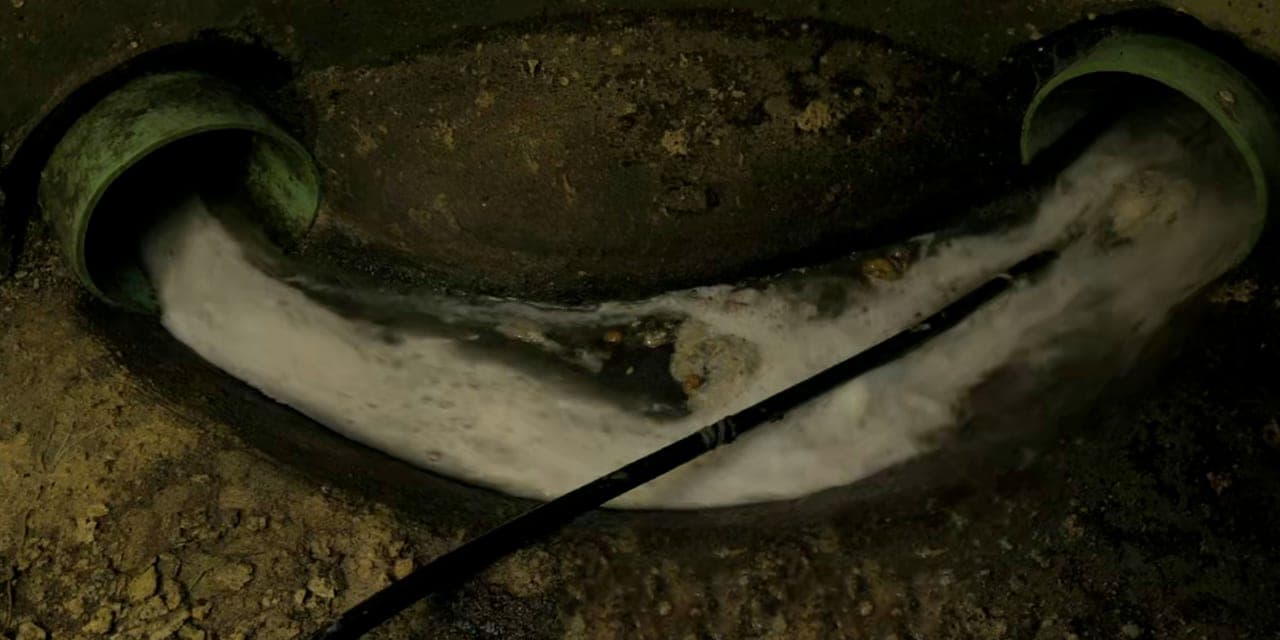
Roots rarely break a sound pipe. They find a gap. The weak point is almost always a joint: the place where two lengths of pipe meet. A joint that has shifted or lost its seal leaks a little moisture into the soil, fine feeder roots follow it, and once they are inside they grow into a mat that fills the pipe.
- Clay pipe comes in short lengths, so a clay lateral has a joint every few feet. Older clay lines in established neighborhoods are where roots show up most.
- Cast iron joints were packed by hand, and as the packing breaks down over the decades the hub can let roots in. The pipe also rusts from the inside, which gives roots and paper something to catch on.
- Orangeburg, the tar-and-wood-fiber pipe used from the 1940s to the 1960s, softens and deforms with age, and roots push into it easily.
- Sandy soil settles and shifts. That can pull joints out of line (an offset) and open the gap roots need.
Once inside, a root mass works like a strainer. Water still gets through for a while, but paper, wipes and grease catch on it, and the line slows until it stops. Snaking cuts a hole through the middle; the roots that are left keep growing.
The warning signs
- Drains slowing down all over the house, not just one sink or tub.
- Toilets gurgling or bubbling when another fixture drains. Our symptom checker walks you through what that usually means.
- Water coming up at the basement floor drain or the lowest toilet when the washer empties.
- A main line that backs up again weeks or months after it was snaked. That cycle is the classic roots pattern.
- Sewage odor near the cleanout or over the line in the yard.
- Big trees between the house and the street, or between the house and the cesspool or septic system, on a home built before the 1970s.
Confirm it on camera before anyone quotes a fix
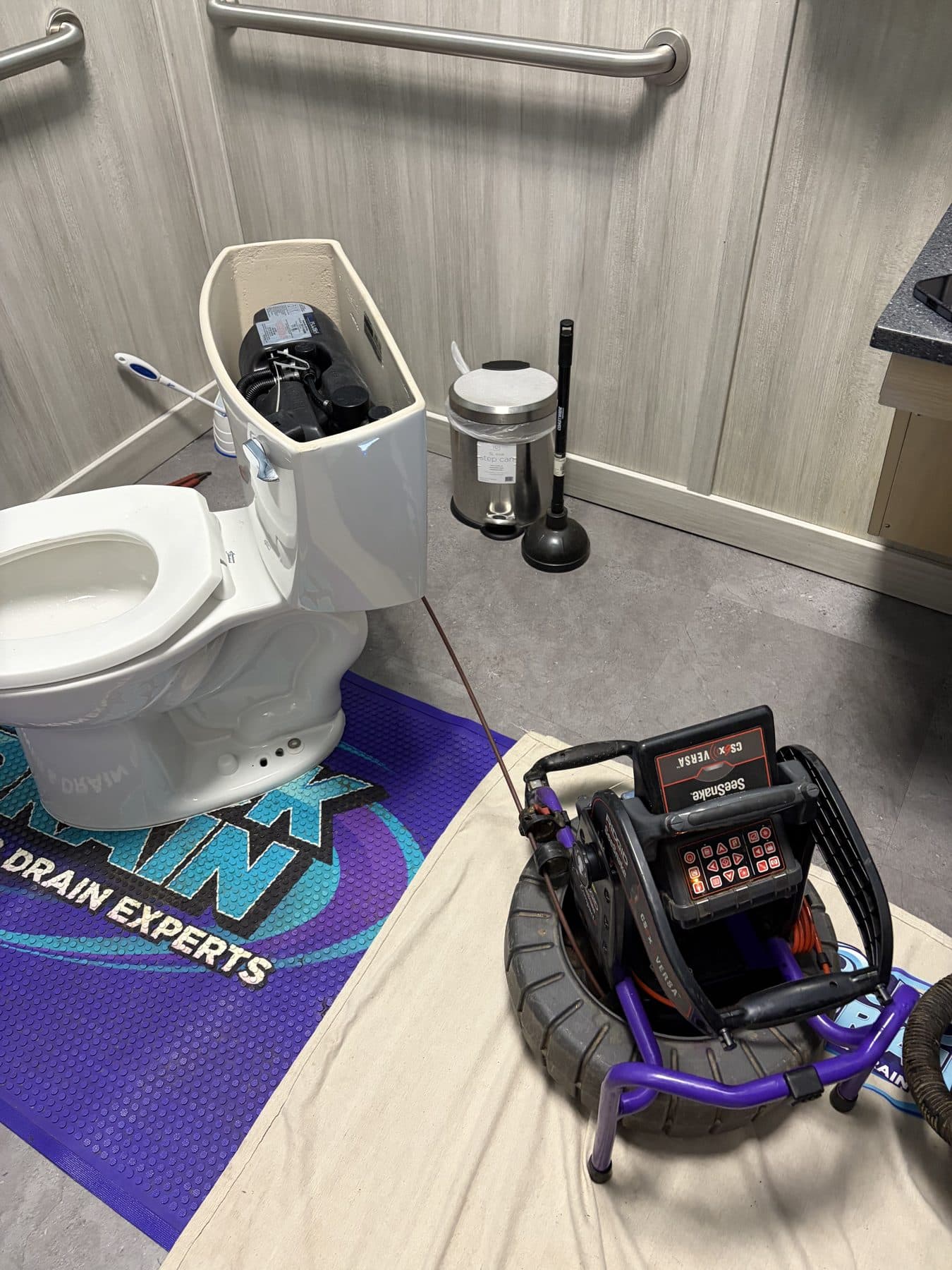
Roots, grease, a belly in the line, a collapsed section and a full cesspool can all look the same from inside the house: slow drains and backups. The only way to know is to look. A sewer camera inspection shows the roots at the exact joint where they come in, and the 512 Hz sonde behind the camera head lets us mark that spot, and its depth, on the lawn. You see the footage, and you keep it.
If you want to know what else turns up on camera, we walked through it in what a sewer camera inspection actually shows you.
What actually fixes it
1. Clear the line: jetting beats snaking for roots
A snake bores a path through the root mass and leaves the rest attached to the pipe wall. High pressure water jetting, at 4000 PSI and 9 GPM on our jetter, cuts roots back to the wall and flushes them out of the line. A second camera run shows the result. We explain the difference in hydro jetting vs. snaking.
2. Keep it clear: maintenance on a schedule
Roots grow back where they got in. If the joint is otherwise sound, the practical answer is to keep the roots cut back before they close the line again. For most homes with a known root problem, jetting every 1 to 3 years does it, and the footage from each visit tells us whether to stretch or shorten that interval. Quick Guard members get preventative jetting and priority scheduling.
3. Fix the way in: repair the joint or section
If the camera shows a broken or offset joint, a crack, or a section that is collapsing, cleaning on a schedule only manages the problem. The lasting fix is to repair or replace the part of the line the roots come through. We show you the footage, mark the location and depth, and explain every option plainly, including what can wait.
What about root-killing products?
Products sold to kill roots in drains may slow new growth, but they won’t clear a pipe that is already packed with roots, and they don’t fix the joint the roots came through. If your home is on a cesspool or septic system, read the label before you put anything like that down the drain: what goes into the line goes into the system.
Long Island specifics
Most of Suffolk County isn’t on public sewer, so for many homes the line at risk runs from the house to a cesspool or septic system, not to the street. Roots in that line cause the same backups, and a system near capacity can look like a root problem. A septic and cesspool inspection checks the line and the system together. The US EPA’s septic system guidance also recommends keeping trees well away from septic systems.
Planting? Keep new trees well away from the sewer line and the system. If you don’t know where your line runs, a locate with the 512 Hz sonde shows the path and depth from above ground, and our What’s Under My Home? tool is a quick first check of whether the house is on sewer, septic or a cesspool. And before any digging at all, call 811 so the utility lines get marked first (call811.com).
The bottom line
Roots are a joint problem, not a clog problem. Snaking buys weeks. Jetting buys much longer. A camera tells you whether the joint can be kept clear with maintenance or needs a repair, so you stop paying for the same backup over and over.
Questions we get
How do I know if tree roots are in my sewer line?
Slow drains throughout the house, gurgling toilets, and a main line that backs up again a few weeks or months after it was snaked all point to roots, especially in an older home with big trees near the line. A camera inspection confirms it and shows the exact joint.
Will roots come back after the line is cleaned?
Yes, unless the way in is fixed. Jetting cuts roots back to the pipe wall, but they regrow at the joint they came through. A maintenance schedule keeps them in check; repairing the joint ends it.
Should I cut down the tree?
Not necessarily. The roots are in the pipe because a joint leaks, and maintaining or repairing that joint is usually the better answer. When you plant new trees, keep them well away from the sewer line and any septic system or cesspool.
How much does it cost to clear roots from a sewer line?
It depends on the line, the access and how much root growth is in it. The emergency cost calculator gives a likely range for clearing it, with root intrusion as one of its options. A repair is priced from the camera footage, and you approve every price before we start.
Can I just use a root killer?
Root products may slow new growth after a line is cleaned, but they won’t clear a pipe that is already full of roots or fix the joint. If you are on a cesspool or septic system, read the label first: what goes down the drain goes into the system.