The basement floor drain is the lowest opening in most houses. When the main line, or the cesspool or septic system it runs to, can’t take any more water, that is where it comes out first. Sewage on the floor is an emergency, and it’s stressful. But the first hour is not about fixing the line. It’s about three things: keeping everyone safe, stopping the water that makes it worse, and getting the right help on the way.
The first 5 minutes: safety
- Keep children and pets out of the basement and away from the water. Sewage carries bacteria; treat anything it touches as contaminated.
- Only if you can do it from a dry spot: switch off the circuits that serve the basement at the panel. Otherwise leave the power alone and stay out.
- If gas appliances are in the water or you smell gas, leave the house and call 911.
- Open a window if you can reach one without crossing the water. The smell is unpleasant, and fresh air helps.
Ready.gov has more on staying safe around floodwater, which applies to sewage too.
Minutes 5 to 15: stop sending water down
Every gallon that goes down any drain in the house has nowhere to go but up, through that floor drain. So:
- No flushing, no showers, no laundry, no dishwasher. Stop the washing machine if it is mid-cycle; its drain cycle is a lot of water at once.
- Tell everyone in the house, including anyone upstairs. Everything drains to the same main line.
- Don’t try to flush it through. If the line is blocked, more water only raises the level in the basement.
Minutes 15 to 30: work out what is backing up
You don’t need to diagnose it, but a few observations help whoever comes out:
- One fixture only (a sink or a tub)? Probably that branch line, not the main.
- The floor drain plus toilets or showers, or the tub filling when a toilet flushes? That points to the main line.
- Gurgling or bubbling when another fixture drains usually means a partial blockage in the main.
- On a cesspool or septic system? Slow drains everywhere, gurgling and sewage odor can mean the system itself is full, especially after heavy rain or where the water table is high, as it is on much of the South Shore.
Not sure whether your house is on public sewer or a cesspool? That changes everything about the fix. Our What’s Under My Home? tool is a quick check, and cesspool, septic or sewer? explains how to tell. Once things are calmer, the symptom checker and Diagnose my drain walk through the likely causes.
Minutes 30 to 60: get the right help on the way
Call a drain service that runs a real emergency line. Ours is (631) 888-6200, 24/7. When you call, it helps to know:
- Where the water is coming up, which fixtures are affected, and whether it is still rising.
- Whether the house is on public sewer, a cesspool or a septic system, if you know.
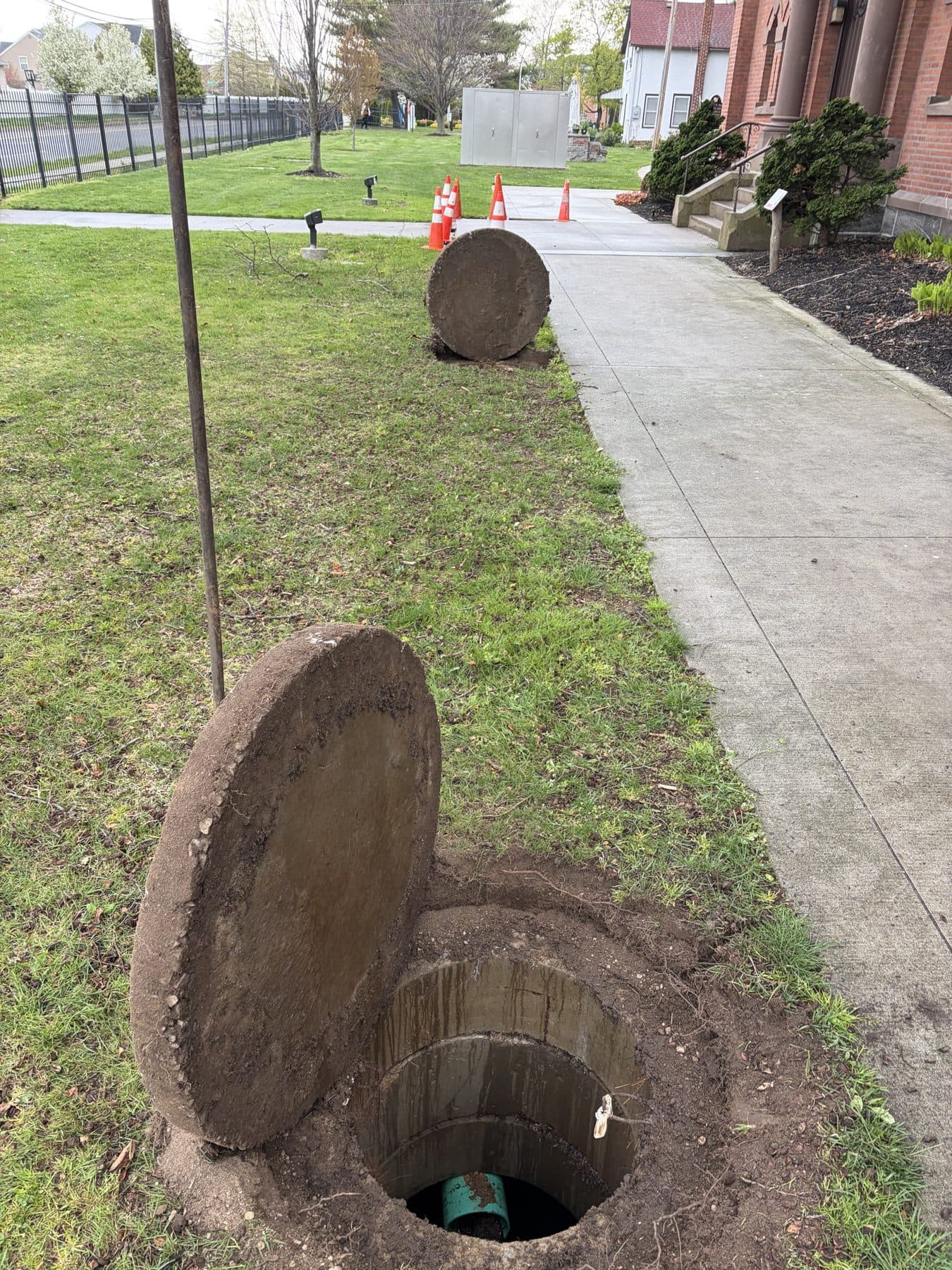
- Where the cleanout is, if you know. It is often a capped pipe in the basement near the front wall, or outside near the foundation. Clear a path to it so the crew can get straight to work.
While you wait: take photos of the damage for your insurance company before anything is cleaned up, and move valuables off the floor if you can do it without walking through the water.
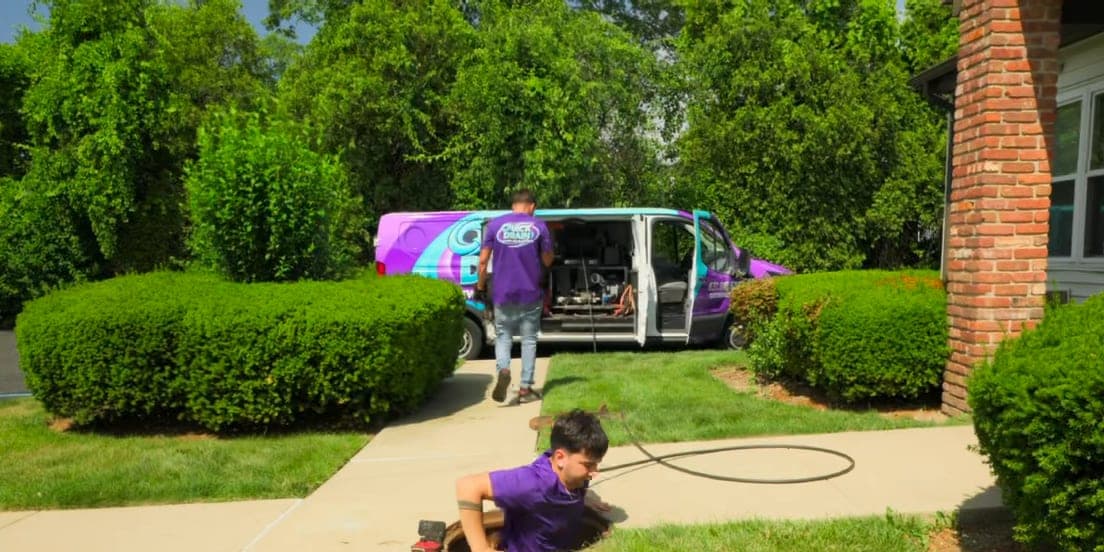
When we arrive, we get into the line at the cleanout or the best access point, locate the blockage with the camera’s 512 Hz sonde, and open the line with the right tool: a cable machine for a simple stoppage, or 4000 PSI water jetting for grease, sludge and roots. Then the camera runs the line so you know what caused it and whether it will happen again. That is how our emergency drain cleaning works. Wondering about cost? The emergency cost calculator gives a likely range in a few steps; the camera sets the final price, and you approve it before we start.
What not to do
- Don’t pour chemical drain openers into a backed-up line. They won’t clear a main line, and they sit in the standing water where they can burn whoever opens the line.
- Don’t open the cleanout cap yourself. A blocked line can be holding a lot of sewage under pressure, and it comes out fast when the cap comes off.
- Don’t rent a big drum machine for the main line. A cable can kink, get stuck or tear up old pipe like Orangeburg or cracked cast iron.
- Don’t start the cleanup bare-handed. Gloves, boots and eye protection at the very least, and keep kids and pets away until it is cleaned and disinfected.
After the line is open: cleanup and prevention
Sewage is contaminated water. Hard surfaces like concrete and tile can be cleaned and disinfected; porous things that soaked it up, like carpet, drywall, insulation and cardboard boxes, usually have to go. For anything more than a small area, a water damage restoration company is worth the call.
Then deal with the cause, so it doesn’t happen again. The camera footage shows whether it was a one-time clog, like a wad of wipes, or something that will repeat: roots at a joint, grease, a belly in the line, scale in old cast iron or a collapsed section. Each one has a different fix, and some, like a grease line, just need jetting on a schedule.
If your home is on a cesspool or septic system, a backup is also a sign to have the system looked at. A septic and cesspool inspection checks the line and the system together. Suffolk County’s Department of Health Services regulates these systems, and the county’s septic grant program has information on upgrading an old cesspool to a newer, nitrogen-reducing system.
And if your home is on public sewer and the backup came from the street main, ask a licensed plumber whether a backwater valve on your main line makes sense. It is designed to stop sewage from the street flowing back into your basement.
The bottom line
Safety first, water off, then call. Don’t spend the first hour fighting the drain: stop using water, keep people away from it and get a crew on the way. (631) 888-6200 reaches us 24/7.
Questions we get
Is a sewer backup an emergency?
Yes. Sewage in the house is a health hazard and the damage spreads the longer it sits. Stop using water and call a 24/7 drain service. Ours is (631) 888-6200.
Can I still use the bathroom upstairs?
No. Every drain in the house runs to the same main line, so water from upstairs ends up in the basement too. Don’t flush or run water until the line is open.
Who is responsible for a sewer backup, me or the town?
On a home connected to public sewer, the line from the house to the street main is usually the owner’s responsibility, and the main itself belongs to the sewer district. Check with your district if the backup came from the street. On a cesspool or septic system, the whole system is yours.
How much does an emergency drain call cost?
It depends on where the blockage is, how we can get to it and what is causing it. The emergency cost calculator gives a likely range. The camera sets the final price, and you approve it before we start.