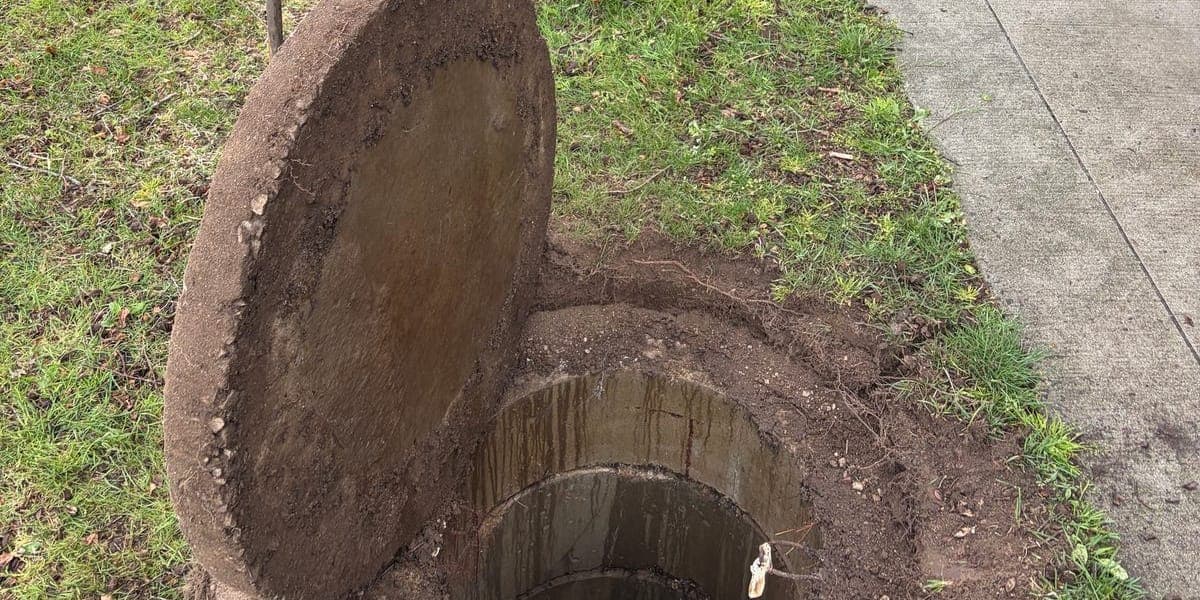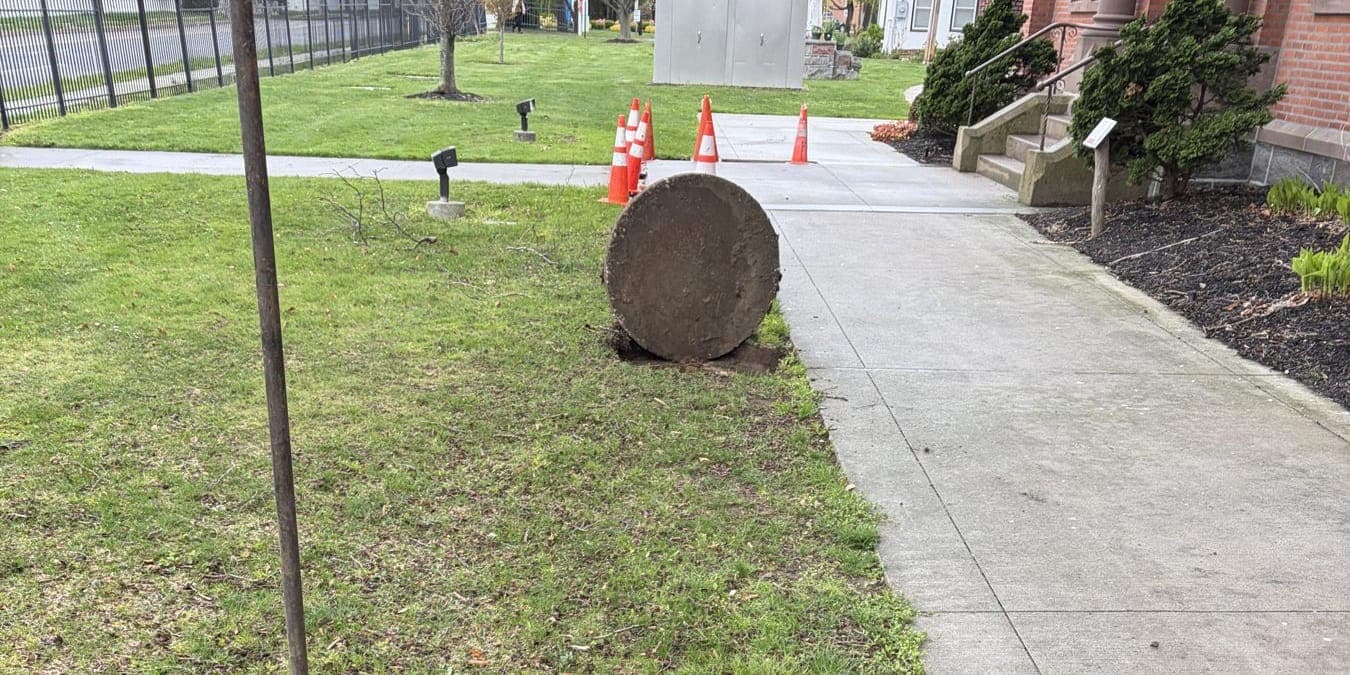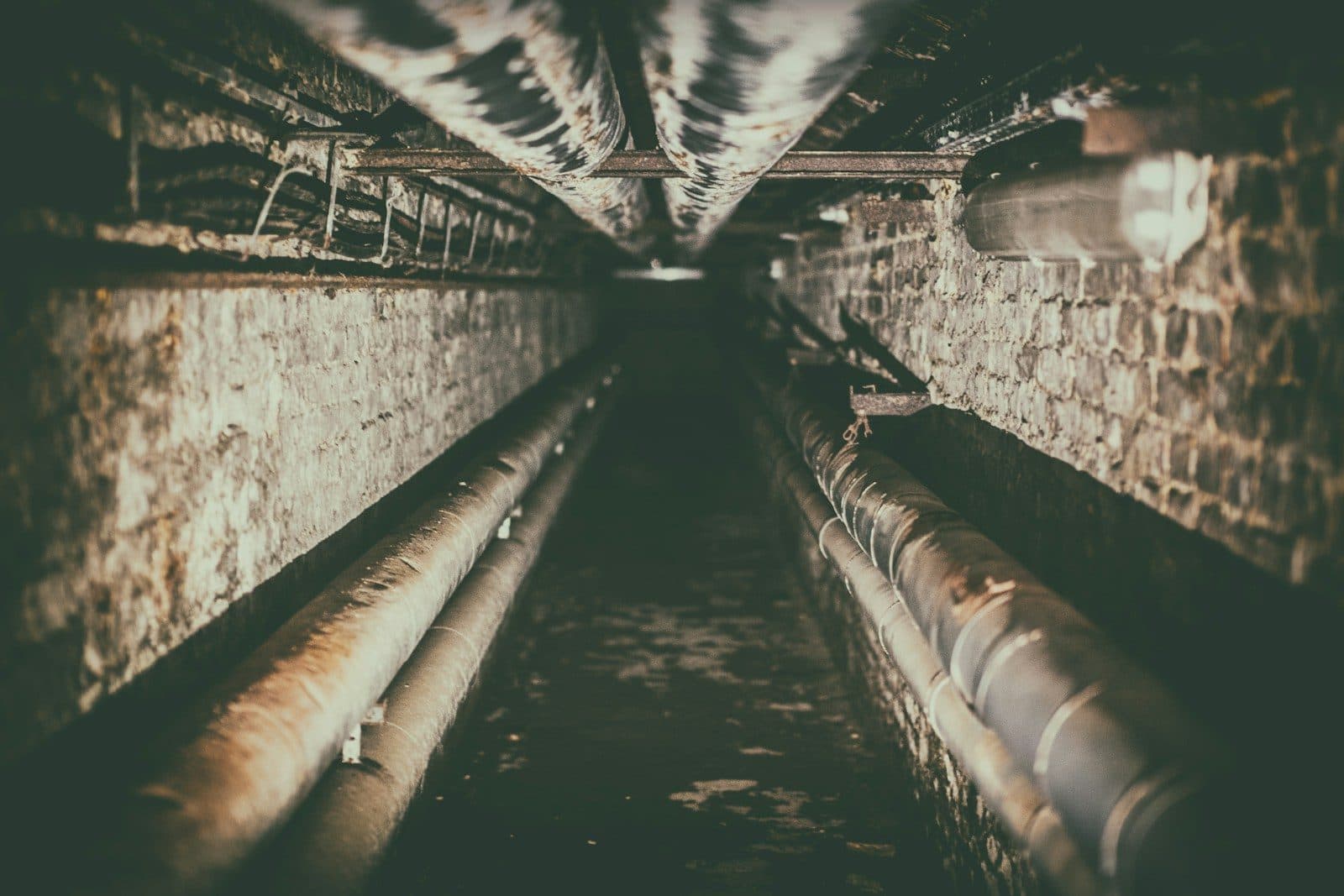
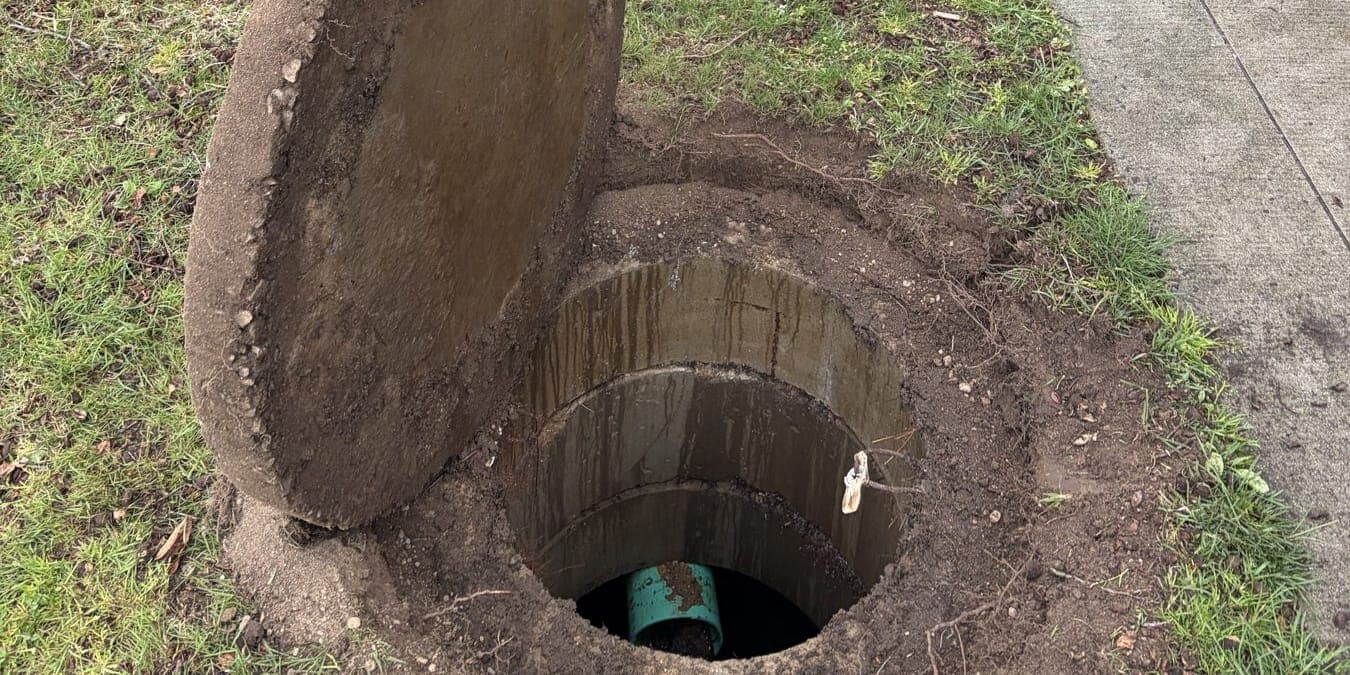
Most of Suffolk County and parts of Nassau’s North Shore still rely on cesspools, and many were built decades ago from concrete block or early precast rings. They do their job out of sight for years. When one starts to fail structurally, the warning signs are on the surface, and they are easy to miss or to mistake for a lawn problem.
Why old cesspools collapse
- Age and corrosion. Gases inside a cesspool attack concrete over time, and block walls and covers weaken from the inside, where nobody sees them.
- Sandy soil. Long Island’s sand drains well, which is why cesspools work here at all. It also washes into gaps and away from walls, leaving voids behind them.
- Load on top. Cars, delivery trucks, pools and patios built over or beside a pool put weight on a structure that was never designed for it.
- Water. A pool that is overloaded or sitting in high groundwater keeps the soil around it saturated and unstable.
- Unknown pools. Older properties sometimes have abandoned pools that were never filled in properly, and nobody living there knows they exist.
Block pools and precast rings
Older Long Island cesspools were often built from concrete block laid in a circle, sometimes with a domed top, and capped with a slab or a round cover. Later pools use stacked precast concrete rings with holes in the walls. Both work the same way, and both age. Block walls can shift, crack or lose blocks as the sand behind them moves, and domed tops and older slab covers can weaken without any sign from above. Precast rings are generally sturdier, but their covers and the top ring still take the load from anything that drives or sits on them. You usually can’t tell which kind you have from the lawn; an inspection from the surface shows it.
The warning signs
In the yard
- A depression, dip or small sinkhole in the lawn, especially near a cover or in a line with other covers.
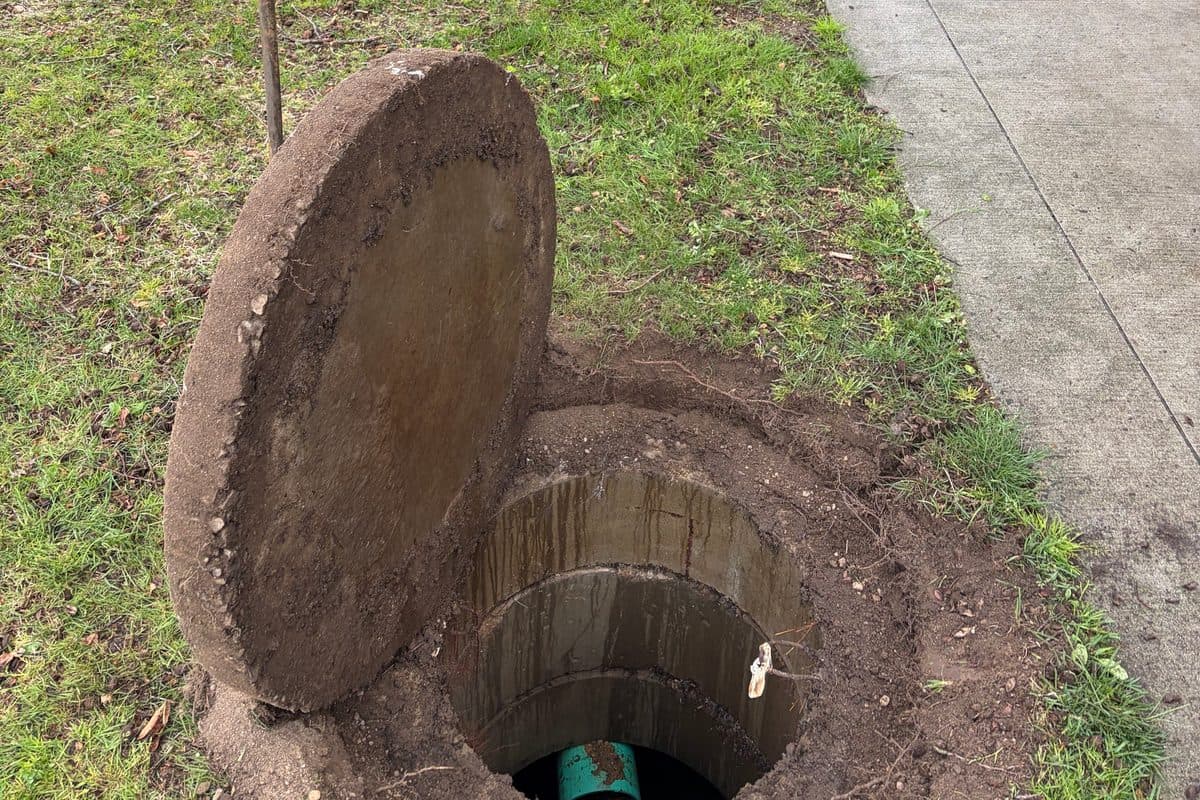
- A cover that is cracked, broken at the edges, tilted, or sitting lower than it used to.
- Soil or sod that has sunk or pulled away around the rim of a cover.
- Grass that is wet, spongy or much greener over one area, or water pooling there after dry weather.
- A sewage smell outside, particularly near the covers.
- A mower wheel, a foot or a car tire that drops into a soft spot.
In the house
- Drains that suddenly back up, especially at the lowest fixture, after the system had been working.
- Gurgling toilets and slow drains everywhere at once.
- A backup soon after the cesspool was pumped. That can mean the walls or the inlet have failed, not that the pool is simply full.
Collapse, full pool or blocked line?
| What you see | Most likely |
|---|---|
| Slow drains, no change in the yard, pumped years ago | A full pool, or a blocked line to the pool |
| Backs up again soon after pumping | Clogged soil around the pool, failed walls, or a blocked inlet |
| A dip, sinkhole or sinking cover | Structural failure: treat as urgent |
| Wet, smelly ground over the pool | Overloaded or failing pool |
Telling them apart matters, because the fixes are completely different. A blocked line from the house is a cleaning job. A full pool needs pumping. A failing structure needs replacing, and in Suffolk a replacement must meet the current standard, not just be another cesspool.
What an inspection looks at
A septic and cesspool inspection locates every pool, opens them safely from the surface and looks at the walls, covers, inlet and liquid level. A camera run from the house shows whether the line feeding the pool is clear, and the 512 Hz sonde on the camera head marks where the line and pools are and how deep. You get the photos and footage.
What happens next
If the line is the problem
Roots, grease or a sag in the pipe between the house and the pool cause many “cesspool” backups. A camera inspection finds it and high pressure water jetting clears it, often with no digging.
If the pool is full but sound
Pumping restores capacity for a while. If it fills again quickly, the soil around the pool is likely clogged and the pool is nearing the end of its life.
If the structure is failing
A collapsing cesspool needs to be made safe and replaced. In Suffolk, the county’s septic grant program can help pay for a nitrogen-reducing I/A system, and it says applications with a documented system failure are prioritized. Read Suffolk County septic improvement program grants, explained and see the county’s septic grant portal.
Prevention and peace of mind
- Know where every cover is. Our What’s Under My Home? tool is a quick first check of what your property has.
- Keep vehicles, dumpsters, pools and heavy landscaping off the pools. The US EPA’s septic care guidance says not to drive or park on a system.
- Make sure covers are intact and secure, and replace a cracked one before someone steps on it.
- Keep grease, wipes and excess water out of the system; see grease and kitchen drains.
- Before buying an older home on a cesspool, get it inspected. A collapse is the most expensive surprise a buyer can inherit.
Questions we get
What are the signs a cesspool is collapsing?
A depression or sinkhole near a cover, a cracked, tilted or sinking cover, soil falling away around the opening, wet or smelly ground over the pool and sudden backups. Keep everyone away and get it inspected right away.
Is a sinking spot in my lawn dangerous?
It can be. Over a cesspool, a sinking spot may mean the structure or its cover is failing. Keep people, pets and vehicles away until it has been checked.
Can a collapsed cesspool be repaired?
A failed structure is usually replaced rather than repaired. In Suffolk, a replacement must meet the current standard, and county and state grants can help pay for an I/A system.
How much does it cost to deal with a failing cesspool?
It depends on what the inspection finds: a blocked line, a full pool or a failed structure. The emergency cost calculator shows likely ranges for clearing a backup, and repairs are priced from what we see, with your approval first.
Should I look inside my cesspool to check it?
No. Lifting a cover can be dangerous, the edge can give way, and the gases inside can be deadly. Leave it to a professional with the right equipment.