Ask any drain crew which line clogs most often and the answer is the kitchen. It isn’t the toilet, it isn’t the shower, it’s the sink line that carries grease, starch and food every day. Here is what is actually happening in that pipe and how to keep it flowing.
What grease does inside a pipe
Fats, oils and grease (often shortened to FOG) are liquid when they are hot. Within a short distance of the sink, the pipe and the water around them are cooler, and they start to solidify on the pipe wall. Over time grease can also react with minerals in the water and harden into a soap-like deposit that is much tougher than the original fat.
- Layer by layer. Each wash adds a thin coat. The pipe narrows slowly, so the sink drains a bit slower each month until one day it stops.
- It catches everything. Rice, pasta, coffee grounds and food scraps stick to the coating and fill the gap faster.
- It travels. Grease that gets past the kitchen line settles in the main, in the house trap or in a cesspool or septic system.
- Cold makes it worse. In winter, and in lines that run along outside walls or through unheated spaces, grease sets faster.
Why the kitchen line is the weak spot
The kitchen drain is usually a smaller pipe with long horizontal runs to reach the main stack, which gives grease plenty of cool, slow-moving pipe to settle in. Dishwashers add hot water and detergent that carry grease farther down the line before it sets. And garbage disposals grind food into small particles, but they don’t do anything about grease; they just give it more to bind with.
Signs your kitchen line is coated
- The sink drains slower and slower, and plunging helps only for a few days.
- The dishwasher leaves water in the sink or backs up into it.
- Gurgling from the sink when the dishwasher or washing machine drains.
- A sour or rancid smell from the drain.
- Water coming up in a basement sink or floor drain when the kitchen is used. That means the problem is past the kitchen line, in the main. Our symptom checker helps narrow it down.
What doesn’t work (and what can make it worse)
Hot water and dish soap
Running the hot tap and adding soap feels like it should dissolve grease, and for a few feet it does. Then the water cools and the grease sets again farther down, often somewhere harder to reach.
Chemical drain openers
Caustic openers can soften a small plug, but they rarely clear a coated line, they are harsh on older pipes, and they make the job more dangerous for whoever opens the line next. If you are on a cesspool or septic system, what goes down the drain goes into the system.
Snaking a grease clog
A cable snake bores a hole through the grease and the water drains again, but the coating on the walls stays. That is why grease clogs come back weeks later. We explain the difference in hydro jetting vs. snaking and in clearing vs. cleaning.
How a grease-packed line gets cleaned properly
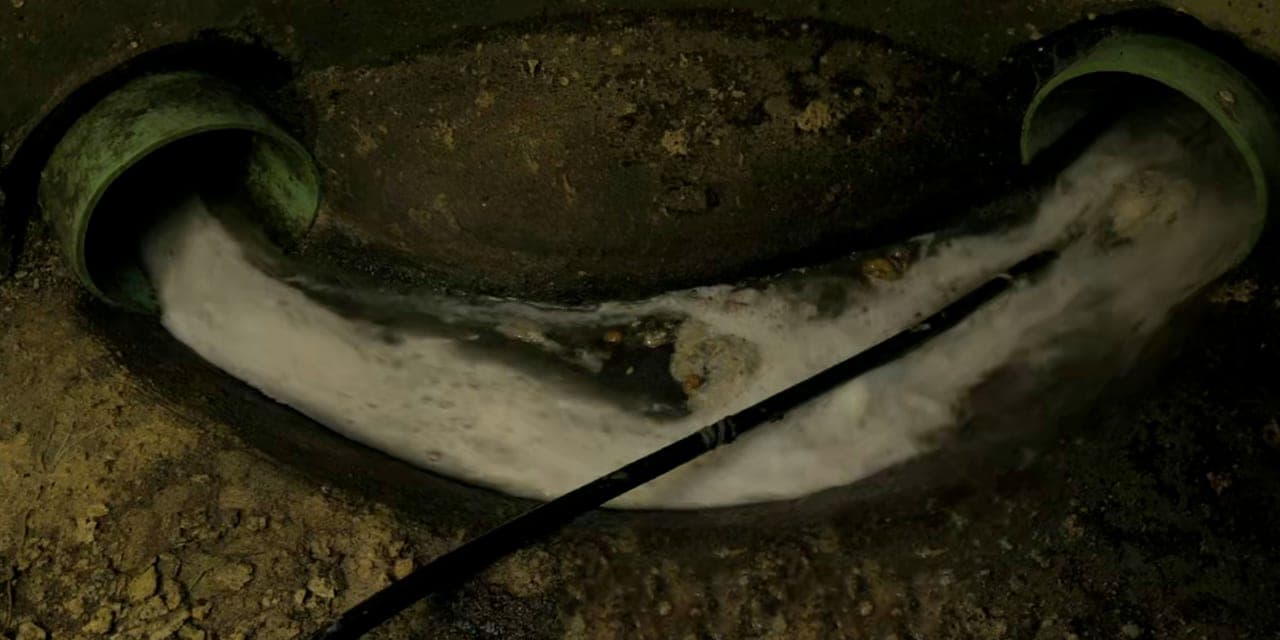
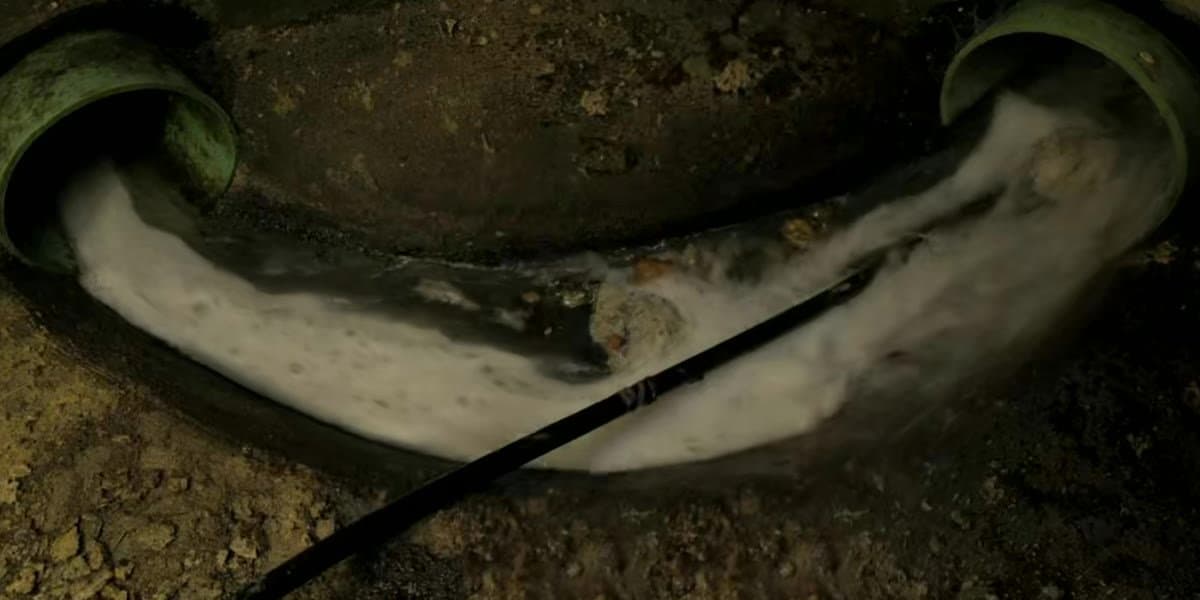
High pressure water jetting at 4000 PSI and 9 GPM scours the pipe wall all the way around and flushes the grease out of the line instead of pushing it farther along. On a kitchen branch we work from the nearest access point; on a main line, from the cleanout. A camera run before or after shows how much buildup there was and confirms the pipe is clean to the wall.
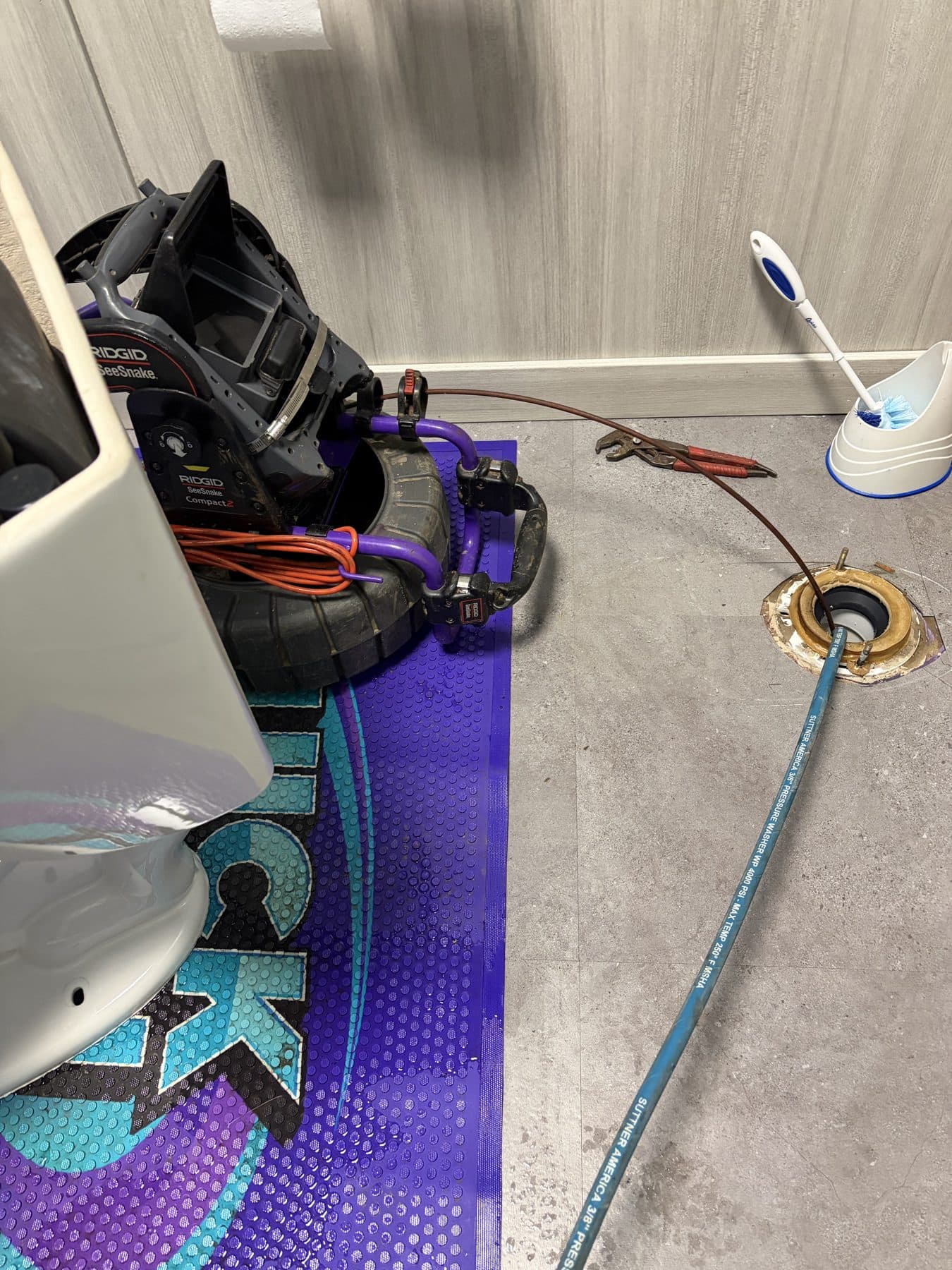
If the camera shows the line also has a sag that holds grease, or old cast iron with heavy scale that grease grabs onto, that changes the plan. Read cast iron drain pipes: descale, line or replace for those cases.
Keeping grease out: a kitchen routine
- Let fat cool in the pan, then pour or scrape it into a can or jar with a lid and put it in the trash.
- Wipe greasy pans, plates and roasting trays with a paper towel before they go in the sink or dishwasher.
- Use a sink strainer and empty it into the trash, not the disposal.
- Run the disposal with cold water and only for small scraps. Keep rice, pasta, peels and coffee grounds out of it.
- For drains that need routine help, an enzyme maintenance product such as our Drain Shot Enzyme is designed for ongoing care. It is not a fix for a line that is already blocked.
Grease, cesspools and septic systems
On much of Long Island the kitchen drains into a cesspool or septic system, not a sewer. Grease is especially hard on them. In a cesspool, it coats the walls and the surrounding soil and stops liquid from soaking away, which shortens the life of the pool. In a septic tank, it builds the floating scum layer that has to be pumped out. The US EPA’s septic care guidance says not to pour cooking oil or grease down the drain for exactly this reason. If your system is slow, a septic and cesspool inspection shows whether grease is the cause.
Restaurants and commercial kitchens
Commercial kitchens produce far more grease, which is why they have grease traps or interceptors and why their lines need cleaning on a schedule. Commercial drain cleaning is scheduled around your hours, with records you can show an inspector. Ask your town or sewer district about the rules that apply to your kitchen.
Questions we get
Can I pour grease down the drain with hot water?
No. Hot water only carries the grease a little farther before it cools and sets again, usually somewhere harder to reach. Let it cool, put it in a container and throw it away.
Does a garbage disposal handle grease?
No. A disposal grinds food, but grease passes straight through and binds with the ground food in the pipe. Keep grease out of the disposal too.
Why does my kitchen sink keep clogging after it was snaked?
Snaking opens a hole through the grease but leaves the coating on the pipe walls, so the line closes again. Jetting cleans the wall and lasts much longer.
How do you clear a grease clog in a kitchen line?
With high pressure water jetting, which scours the pipe wall and flushes the grease out, followed by a camera check. For likely costs, see the emergency cost calculator.
Is grease bad for a cesspool or septic system?
Yes. Grease coats cesspool walls and the surrounding soil so liquid can’t soak away, and it builds up the scum layer in a septic tank. Keep it out of the drains.