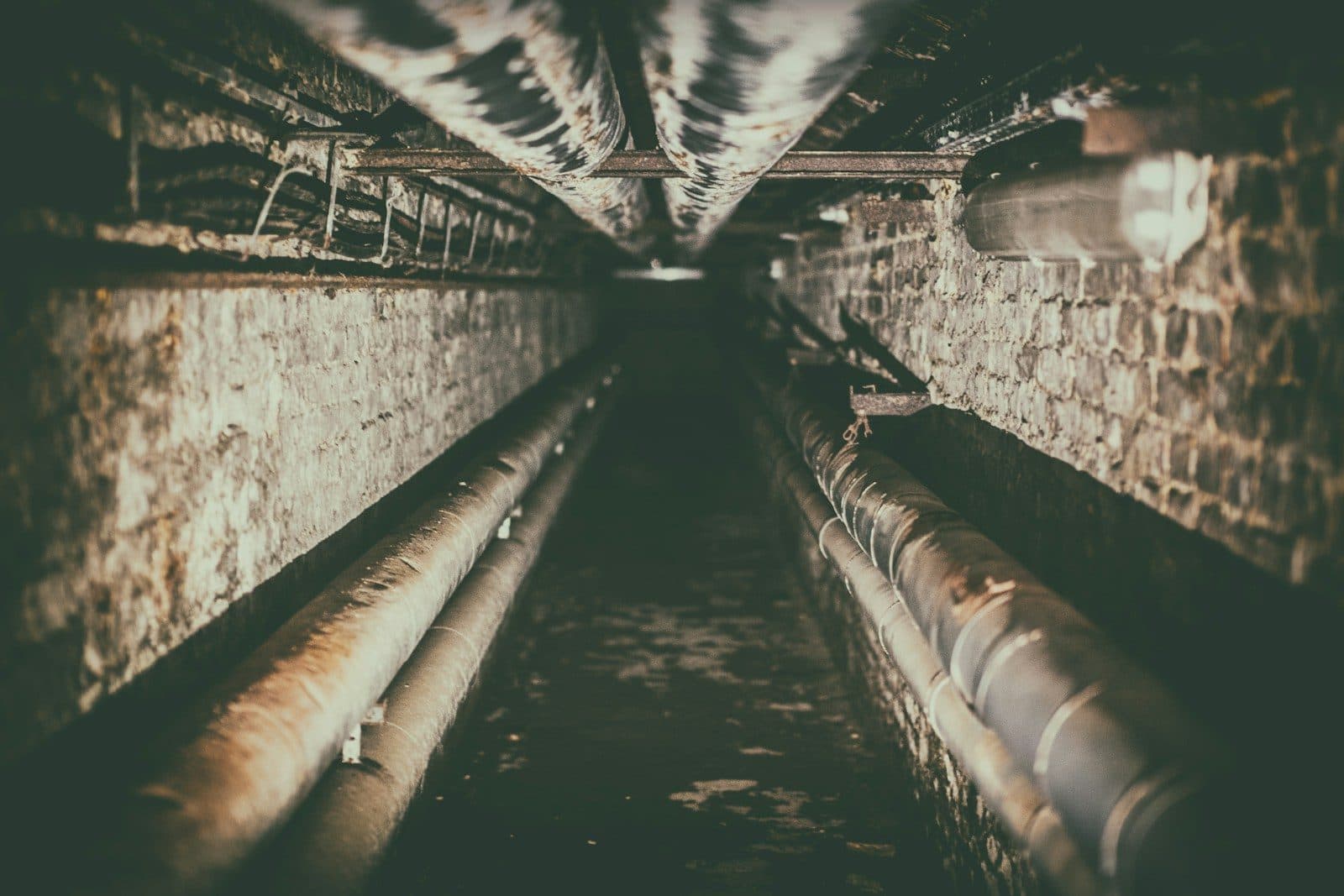
On Long Island, where your wastewater goes depends a lot on which side of the county line you live on. That matters the day a drain backs up, the day you sell, and the day you plan an addition. Here is what each system is, how Nassau and Suffolk differ, and how to find out what is under your own lawn.
What a cesspool is
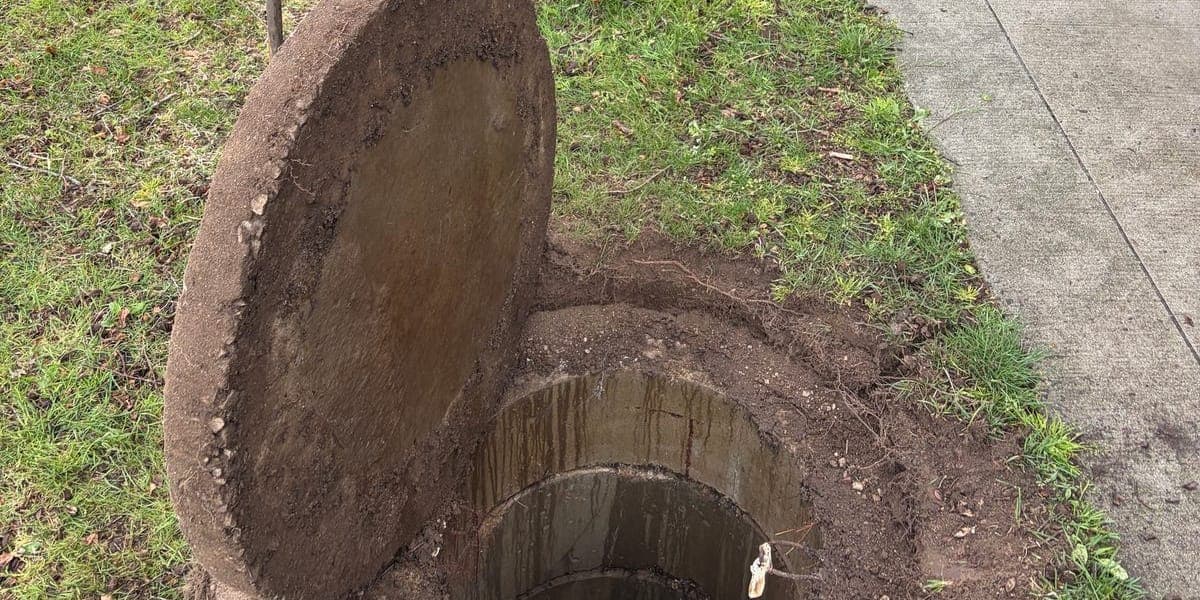
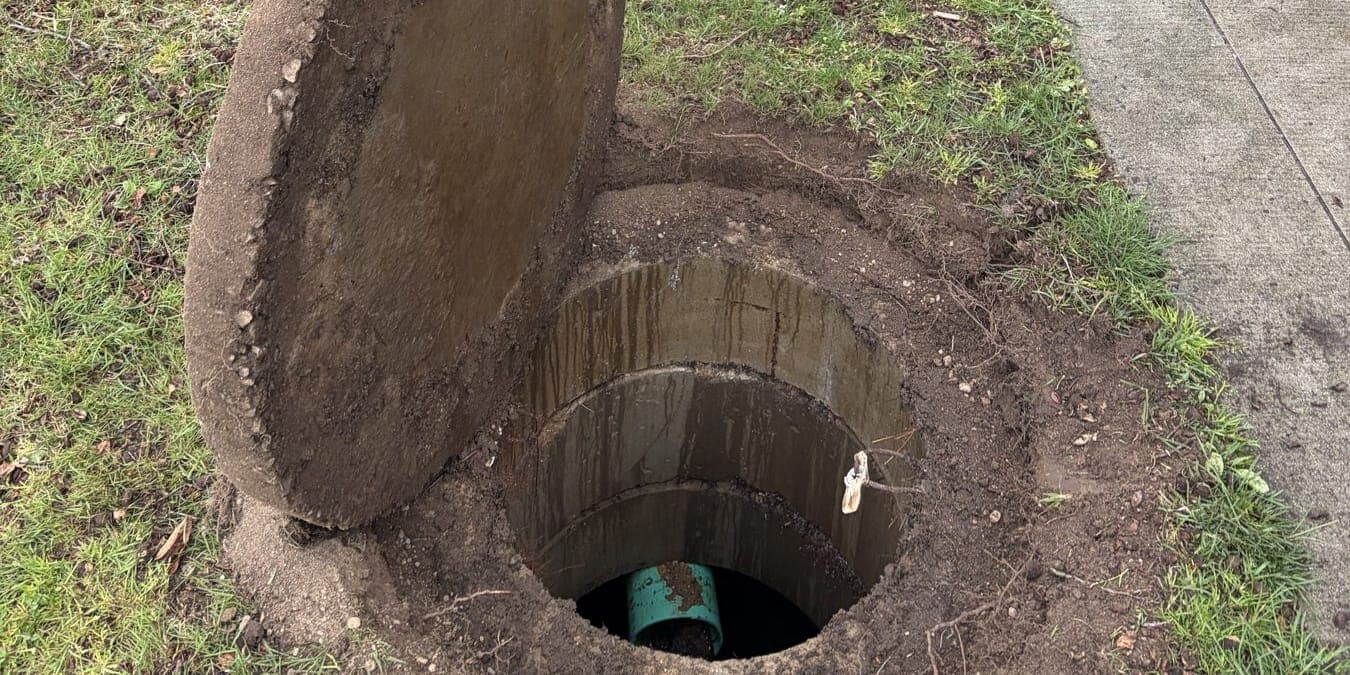
A cesspool is a pit lined with concrete block or precast concrete rings, with open joints or holes in the walls and a heavy cover on top. Everything from the house goes in: solids, grease, paper and water. The liquid seeps out through the walls and bottom into the surrounding sand, and the solids stay behind. Older homes often have two or three pools in a row, the second taking the overflow from the first.
- No separation. Solids and grease sit in the same pit the liquid has to leave through, so the walls and the soil around them slowly clog.
- One structure does everything. When the pit can no longer drain, the whole house backs up, usually at the lowest fixture first.
- Age matters. Many of the block pools still in service were built decades ago, and the walls and covers wear out. Read our guide to cesspool collapse warning signs.
What a septic system is
A septic system adds a step. Sewage goes first into a watertight tank. Solids sink, grease floats, and the clearer liquid in the middle flows out to a leaching pool or drain field, where the soil does the rest. Because solids stay in the tank, the leaching structure lasts longer and the tank can be pumped before it overloads anything.
An I/A system (innovative/alternative onsite wastewater treatment system) is a septic system with an added treatment stage that removes much more nitrogen before the water goes into the ground. That is what Suffolk now requires for new construction, and what its grant program pays toward. We explain the grants in Suffolk County septic improvement program grants, explained.
| Compared | Cesspool | Septic system | I/A system |
|---|---|---|---|
| How it works | One pit holds sewage; liquid soaks out | Tank settles solids; liquid goes to a leaching pool or field | Septic tank plus a treatment stage that removes nitrogen |
| Where solids go | Stay in the pit with the liquid | Stay in the tank until it is pumped | Stay in the tank until it is pumped |
| Upkeep | Pumping when it runs slow or backs up | Regular inspection and pumping | Regular pumping plus a service contract |
| Where you find it | Older homes in unsewered areas | Newer and replaced systems | New Suffolk construction and grant upgrades |
Nassau County: mostly sewered, with a North Shore exception
Nearly 90% of Nassau County is connected to public sewers, according to a 2025 Long Island Press report. Most of the sewage goes to county treatment plants, and Nassau County’s Department of Public Works lists ten independent treatment facilities as well, including the Port Washington and Great Neck water pollution control districts and the City of Long Beach. Several villages, including Garden City, Freeport, Mineola, Hempstead, Roslyn and Rockville Centre, run their own collection districts that pump to county plants.
The exception is the North Shore. The same report cites a Long Island Sound Study estimate of some 40,000 homes and small businesses in Nassau still on cesspools or septic tanks, most of them between Kings Point and Oyster Bay. If you are buying in an estate area of the North Shore, do not assume there is a sewer in the street; use our pre-purchase checklist for Hamptons and North Shore homes.
Suffolk County: most homes have their own system
Suffolk is the other way around. The county’s own septic grant page says nearly 70% of Suffolk homes use cesspools and septic systems. Sewer districts exist, mostly in denser areas and newer developments, but large parts of the county have never had a sewer main.
What the rules say now
- Cesspools have not been allowed in new Suffolk construction since the early 1970s, which is why so many pre-1970s homes still have them.
- A failed cesspool can no longer simply be replaced with another cesspool; a replacement has to meet the current standard, at minimum a septic tank ahead of the leaching structure.
- Since July 1, 2021, Suffolk’s sanitary code has required an I/A system for new homes and for certain major renovations and expansions, such as adding bedrooms.
The details depend on your lot, your plans and your town, so check with the Suffolk County Office of Wastewater Management before you design an addition or buy a house you plan to expand.
How to tell which one you have
Start with records and the yard, then confirm with a camera. We cover the record search step by step in cesspool, septic or sewer: how to find out what’s under your home, and our What’s Under My Home? tool is a quick first check by address.
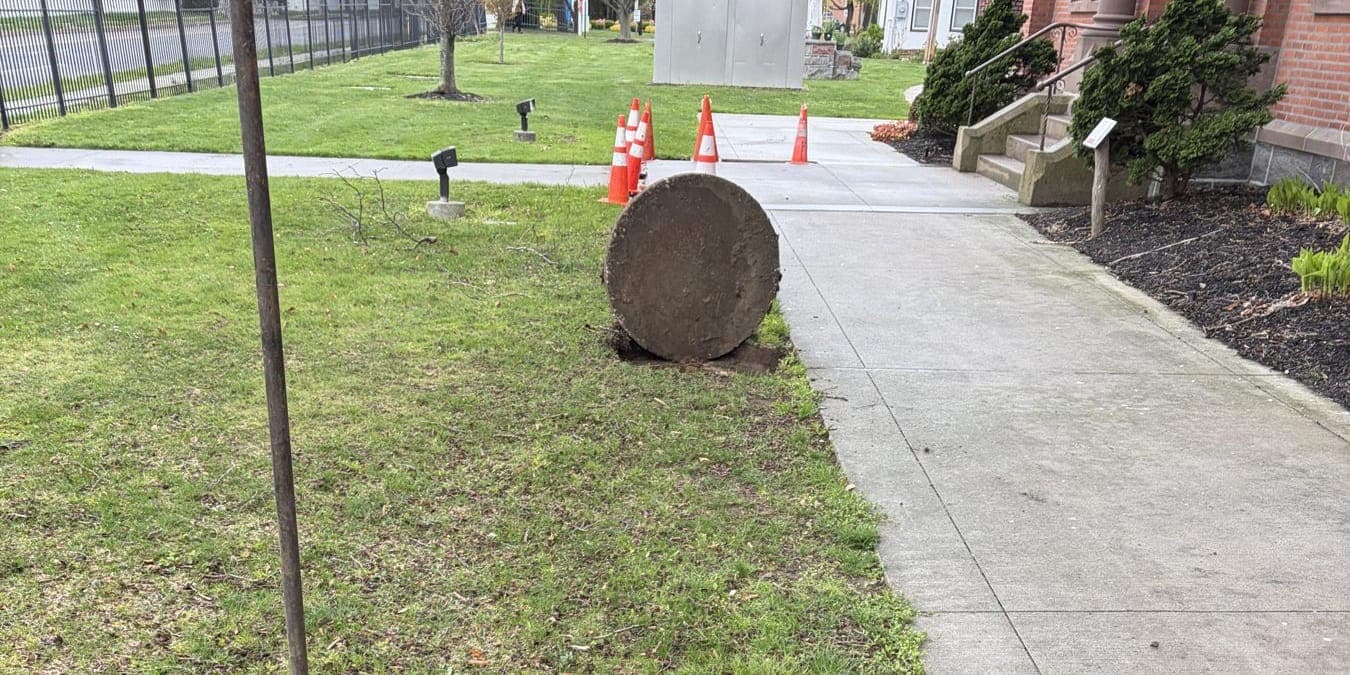
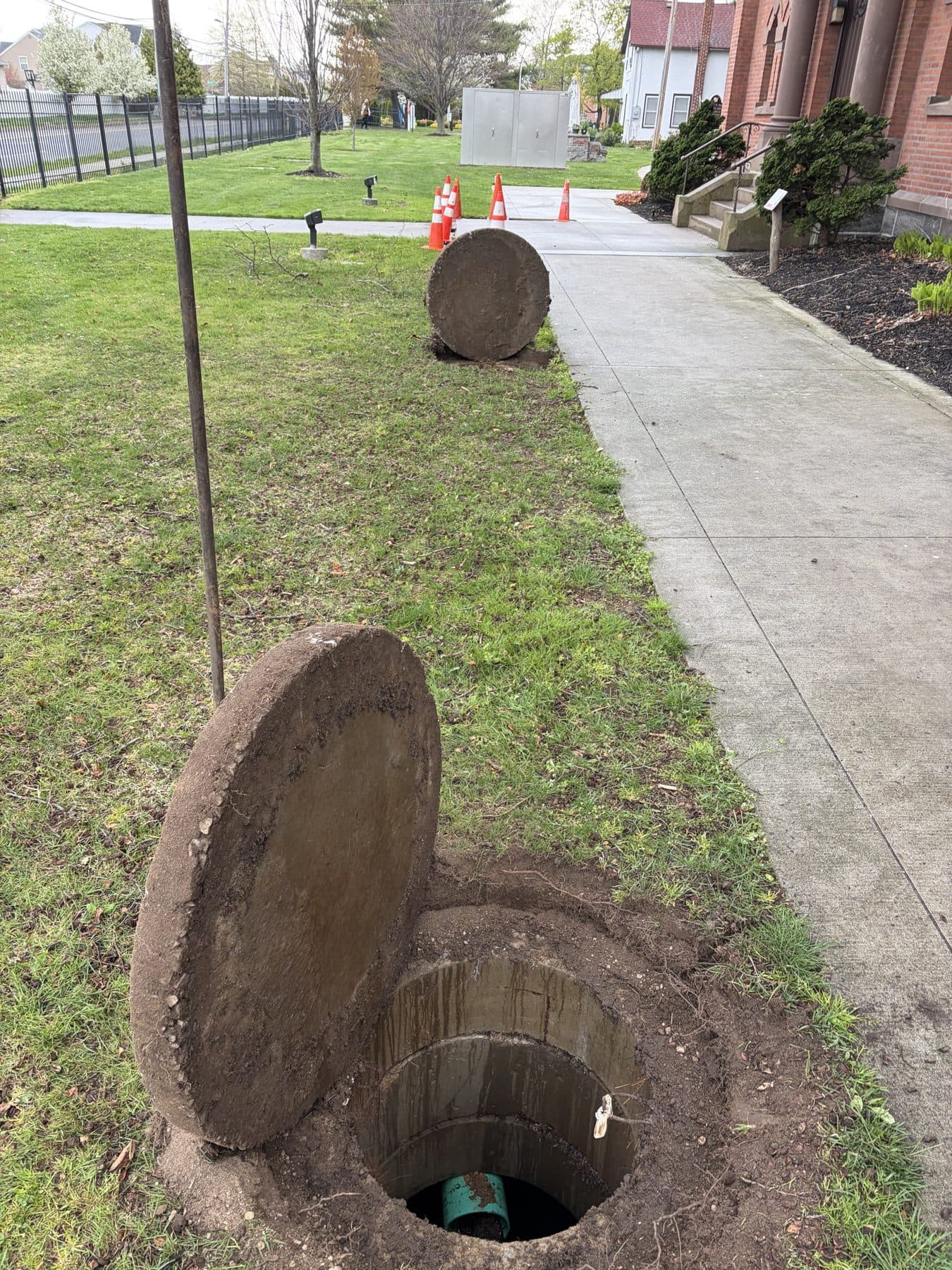
- Round concrete covers in the lawn, often in a line, usually mean cesspools or leaching pools.
- A rectangular cover or two access lids close together near the house often means a septic tank.
- A sewer charge on your tax bill, a cleanout or house trap in the basement and a line heading toward the street suggest public sewer.
- When the records disagree, a camera run from the cleanout follows the pipe, and the 512 Hz sonde on the camera head marks where it goes and how deep it is.
Looking after each type
The US EPA’s septic care guidance says household systems should generally be inspected at least every three years, with tanks typically pumped every three to five years, depending on household size and use. Cesspools do not have a tank to protect them, so the habits matter even more:
- Spread out laundry and long showers instead of running everything on one day.
- Keep grease, wipes and paper towels out of the drains. Grease is the fastest way to seal a cesspool wall; see grease and kitchen drains.
- Don’t drive or park over covers, tanks or leaching pools.
- Pump before a holiday or a full house, not after the backup.
Don’t forget the pipe in between
Many “full cesspool” calls turn out to be the line between the house and the system: roots at a joint, a sag that holds water, or grease. Pumping won’t fix those. A camera inspection shows whether the problem is the pipe or the system, and high pressure water jetting clears the line wall to wall when that is the fix.
Questions we get
What is the difference between a cesspool and a septic tank?
A cesspool is one pit that holds all the sewage and lets the liquid soak into the ground through its walls. A septic system has a watertight tank first, where solids settle, so only the liquid goes on to the leaching pool or field.
Are cesspools still legal on Long Island?
Existing cesspools can stay in use, but Suffolk has not allowed them in new construction for decades, and a failed cesspool must be replaced with a system that meets the current standard. In Nassau, homes in unsewered areas follow county health rules. Check with your county health department for your property.
Is most of Nassau County on sewers?
Yes. Nearly 90% of Nassau is connected to public sewers, according to a 2025 Long Island Press report. Pockets of the North Shore, roughly from Kings Point to Oyster Bay, still rely on cesspools and septic tanks.
How often should a septic tank be pumped?
The US EPA says household tanks are typically pumped every three to five years and systems inspected at least every three years. Household size and water use change that. A cesspool has no tank, so watch for slow drains and pump before it backs up. The emergency cost calculator shows likely ranges for clearing a backup.
Do I need an I/A system?
In Suffolk, new homes and certain major renovations need one, and a replacement for a failed cesspool must at least meet the current septic standard. Many owners upgrade voluntarily with county and state grants. Ask the Suffolk County Office of Wastewater Management about your plans.