After World War II, builders needed a lot of pipe fast, and cast iron was heavy and in short supply. Orangeburg was light, cheap, easy to cut and quick to lay. It went into the ground under countless new lawns across Nassau and western Suffolk. Many of those lines are still there, doing their job long past the point anyone expected them to.
What Orangeburg pipe is
Orangeburg is often called bituminized fiber pipe. Layers of wood pulp were formed into a tube and impregnated with coal tar pitch, which made it water-resistant and stiff enough to bury. Its name comes from the Fiber Conduit Company of Orangeburg, New York, later the Orangeburg Manufacturing Company. Plastic pipe (PVC and ABS) replaced it in the 1970s, and local codes dropped it from approved materials around then, at different times in different places.
- Where it was used: mostly the buried lateral from the house to the street sewer or to a cesspool or septic system. Inside the house, drains of the same era are usually cast iron.
- What it looks like: a black, slightly fibrous pipe, often with tapered joints, with no metallic ring when tapped.
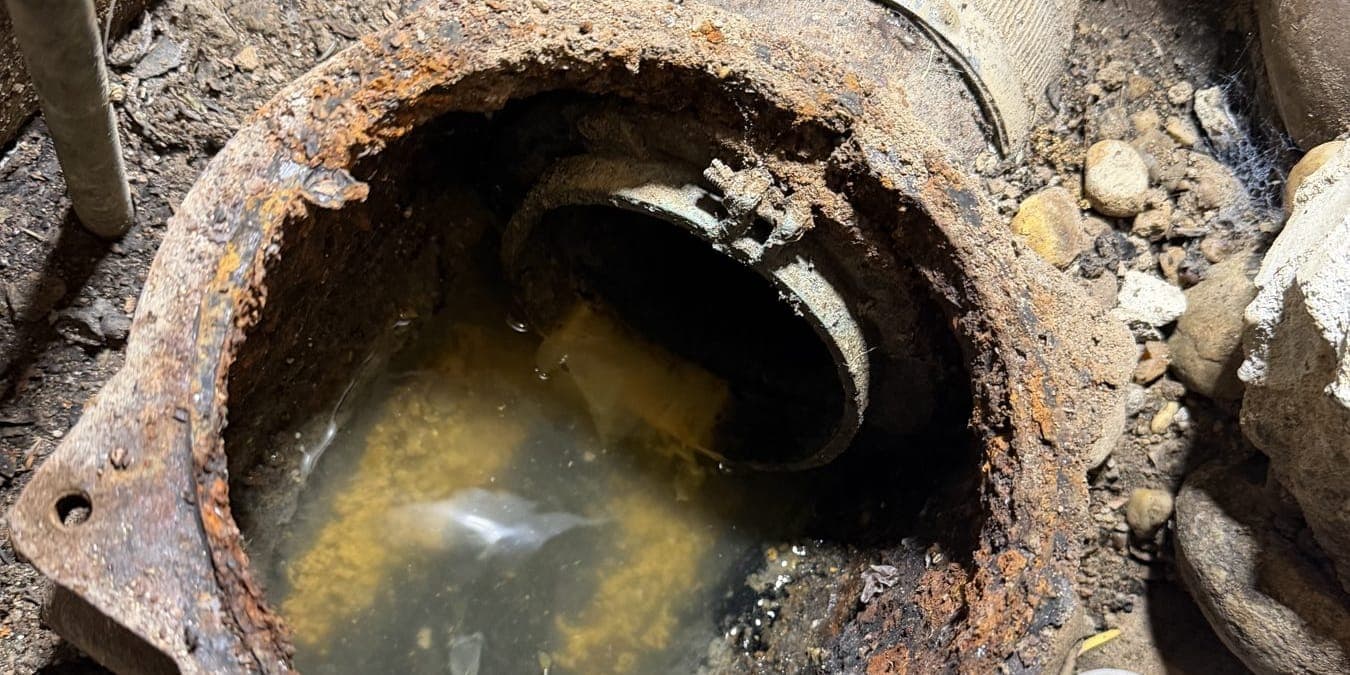
- What it is not: it isn’t cast iron (which rusts orange-brown) or modern black ABS plastic (which is smooth and uniform).
How it fails
Orangeburg holds its shape only as long as the tar keeps water out of the fiber. Over decades, water, soil pressure and the weight of whatever is above it take their toll.
- Deformation. The round pipe slowly squashes into an oval, then a slot, under the weight of the soil and anything driven over it.
- Blistering and delamination. The inner layers bubble and peel, narrowing the pipe and catching paper.
- Root intrusion. Softened walls and joints let roots push straight through, not only at joints.
- Collapse. A section can finally give way, and the line stops completely.
Signs you might have it
- The house was built from the late 1940s to the early 1970s and the lateral has never been replaced.
- The main line backs up repeatedly, and snaking helps only for a while.
- The snake or cable comes back with black, fibrous or tarry material, or the cable stops at the same spot every time.
- There is a soggy or sunken strip of lawn along the line.
- General warning signs of a failing main line, covered in signs your sewer line is failing in an older Long Island home.
How to know for sure
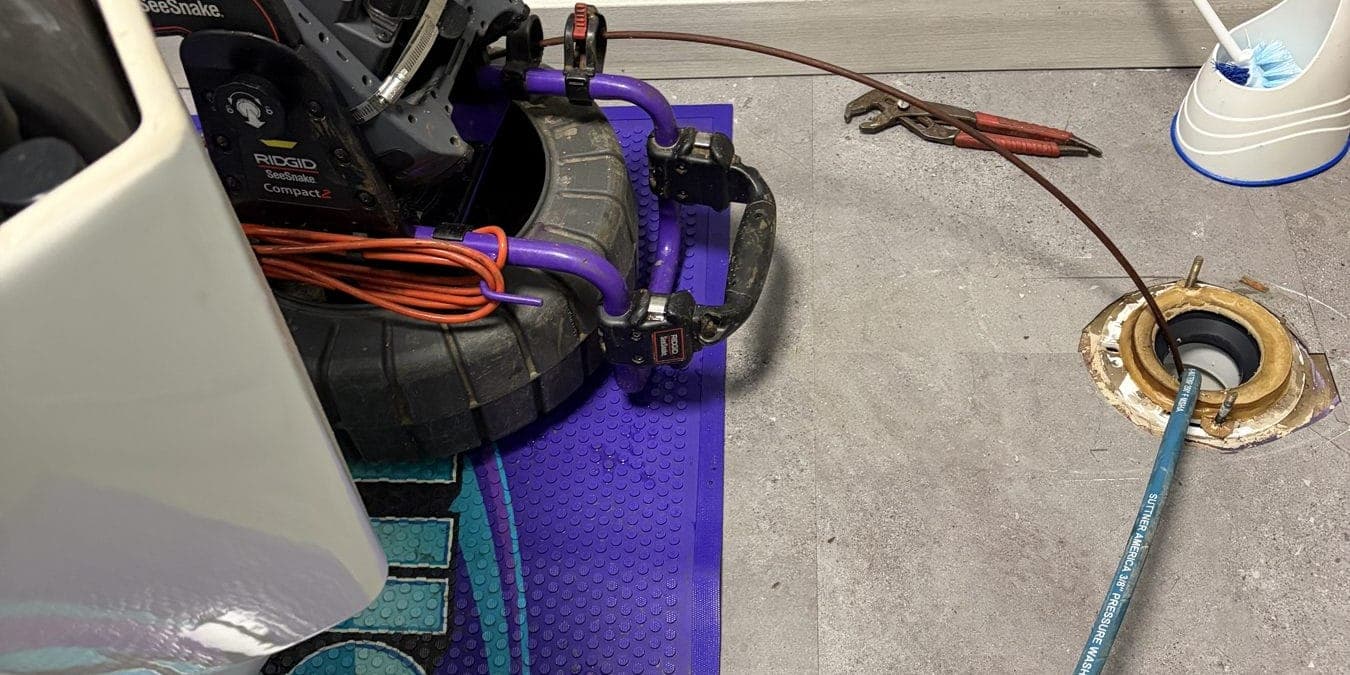
You can’t identify buried pipe from inside the house, and the age of the house is only a hint, since many laterals were replaced along the way. A sewer camera inspection shows the pipe wall itself: Orangeburg looks dark and layered, often blistered or oval. The camera also shows where the pipe changes material, typically at a coupling just outside the foundation, and the 512 Hz sonde on the camera head marks the exact path and depth on the lawn.
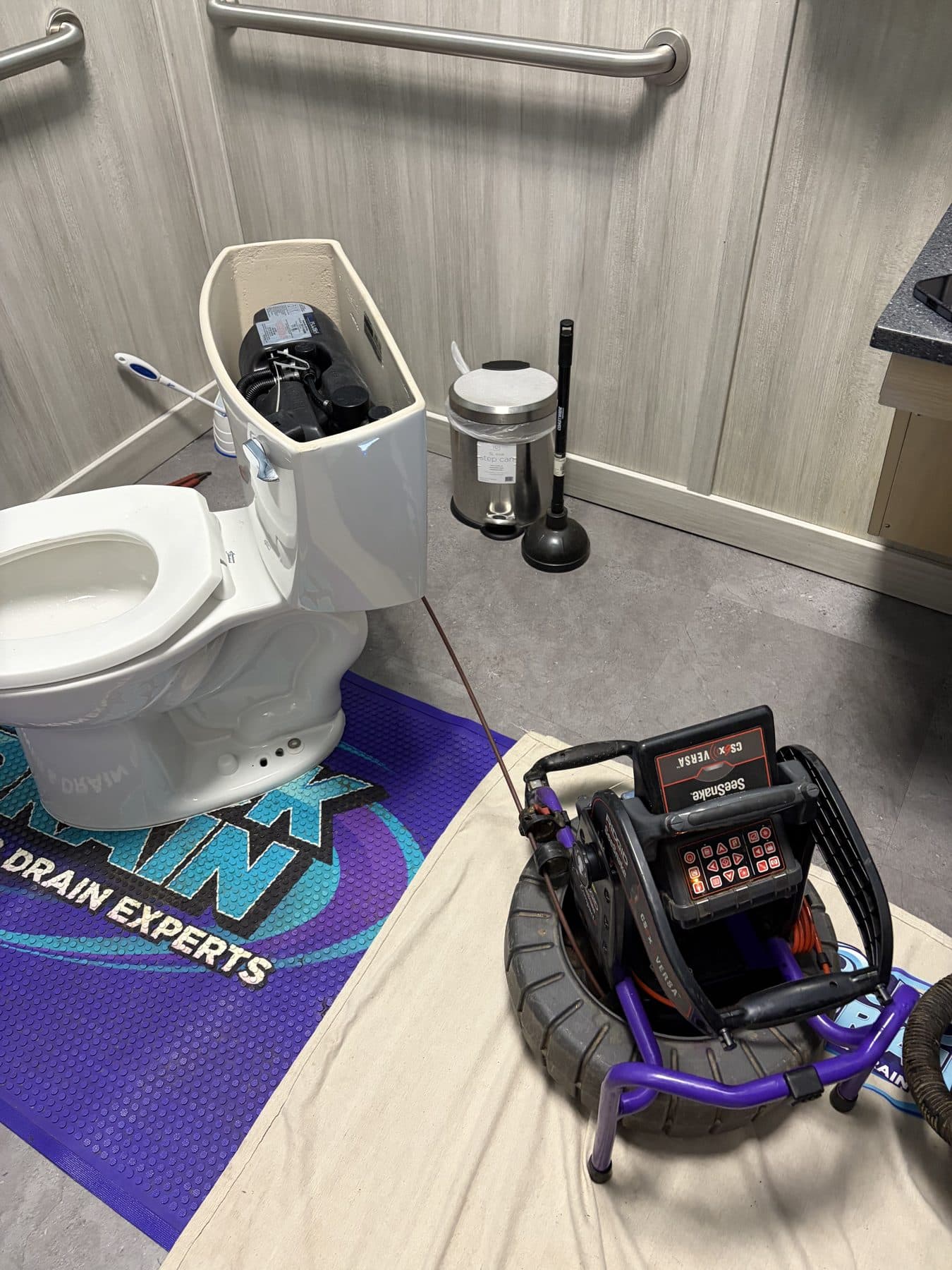
That’s also why we don’t clear a suspected Orangeburg line blindly. A cutter or an aggressive jet on a softened wall can do damage. We explain the case for looking first in camera inspection vs. blind snaking.
Your options
Short term: keep it flowing, carefully
If the line is still round and mostly sound, careful cleaning with the right tool for the pipe can restore flow and buy time to plan. Sewer line cleaning is matched to what the camera shows, and a second camera run confirms the result.
Spot repair
When one section has collapsed and the rest is in fair shape, replacing that section can work, but Orangeburg tends to fail along its whole length over time. Expect the next weak spot to show up sooner or later.
Replacement
For most Orangeburg laterals, replacement with modern pipe is the lasting fix. Deformed Orangeburg generally can’t be relined, because a liner follows the shape of the pipe it is in. The camera locate keeps the dig as small and precise as possible, and you see the footage and every option before deciding.
Living with it until you replace it
- Keep heavy vehicles, dumpsters and equipment off the path of the line; the weight speeds up flattening.
- Be strict about what goes down the drains: no wipes, grease or paper towels, which catch on blistered walls.
- Watch for the early signs (slow drains everywhere, gurgling, a soft spot in the lawn) and act before a full backup.
- Don’t plant trees over or near it. See Long Island trees and your sewer line.
- Keep the camera footage, so the next inspection can show how fast the pipe is changing.
Buying or selling a post-war home
Orangeburg is one of the most common surprises in Long Island home sales. It is out of sight, it isn’t on most disclosures, and it can fail without warning. If you are buying a house from that era, put a camera inspection of the lateral in your inspection period; see buying a house on Long Island: get the sewer line inspected before you close and our home buyer tools. If you are selling, knowing first lets you fix it or price it on your terms.
Quick facts
| Compared | Orangeburg |
|---|---|
| Made of | Wood fiber impregnated with coal tar pitch |
| Common use | Buried sewer laterals, roughly late 1940s into the 1970s |
| Typical failures | Flattening, blistering, root intrusion, collapse |
| How to identify | Camera inspection of the line |
| Usual lasting fix | Replacement with modern pipe |
Questions we get
What is Orangeburg pipe?
A sewer pipe made of layered wood fiber soaked in coal tar, named after Orangeburg, New York, where it was made. It was widely used for buried sewer laterals from roughly the late 1940s into the 1970s.
How do I know if my house has Orangeburg pipe?
A camera inspection of the sewer line is the reliable way. Homes built from the late 1940s to the early 1970s whose lateral has never been replaced are the most likely to have it.
Does Orangeburg pipe need to be replaced?
Not always immediately, but it deteriorates with age and tends to fail along its length. Once it has flattened, blistered or collapsed, replacement is usually the lasting fix.
Can Orangeburg pipe be lined instead of replaced?
Usually not once it has deformed, because a liner takes the shape of the pipe it is installed in. A camera inspection shows whether the pipe is still round enough for any option other than replacement.
What does it cost to deal with an Orangeburg line?
Clearing a backup depends on access and the blockage; the emergency cost calculator shows likely ranges. Repairs and replacements are priced from the camera footage, and you approve every price before work starts.