A huge share of Long Island’s houses went up in the years after World War II. Levittown alone was built between 1947 and 1951, and the same building boom filled in much of Nassau and western Suffolk. Many of those homes still have their original sewer pipe. The Village of Valley Stream’s sewer lateral guide puts it plainly: the average home there still has its original lateral from the 1950s. Pipes that old don’t fail all at once. They give you signs first.
Why older Long Island homes are prone to it
The pipe materials of the era
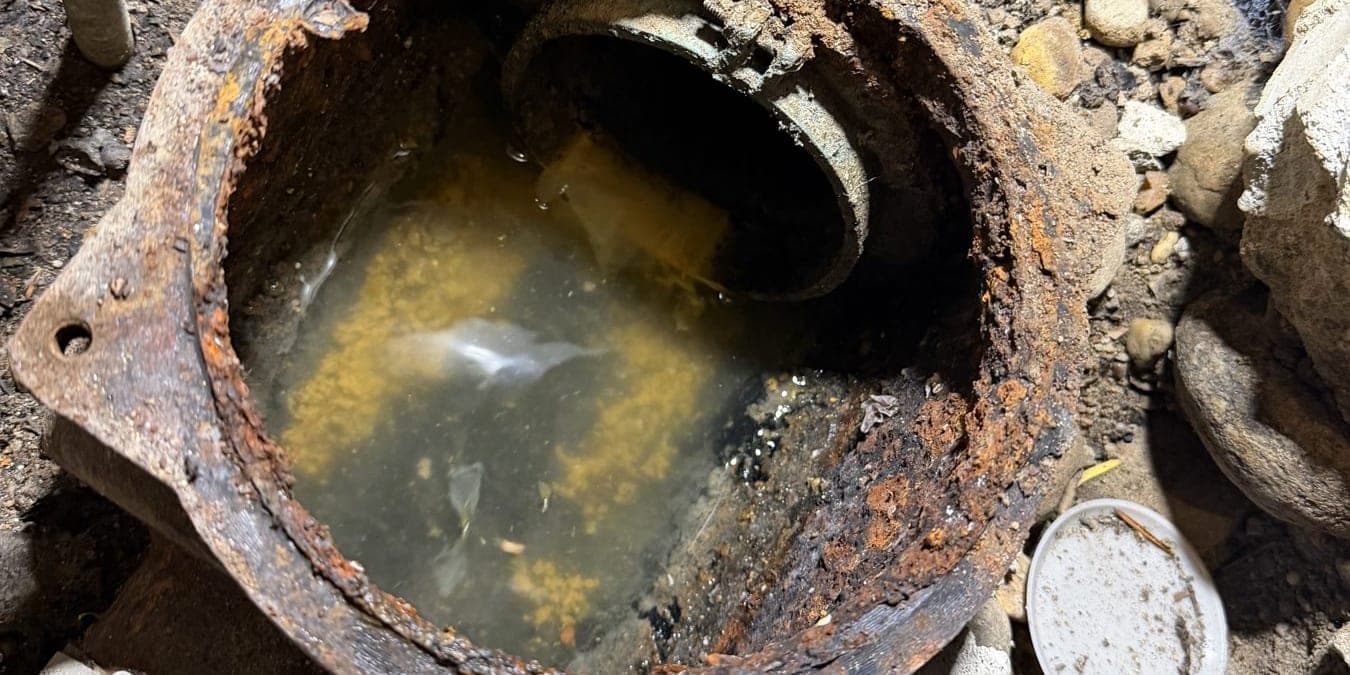
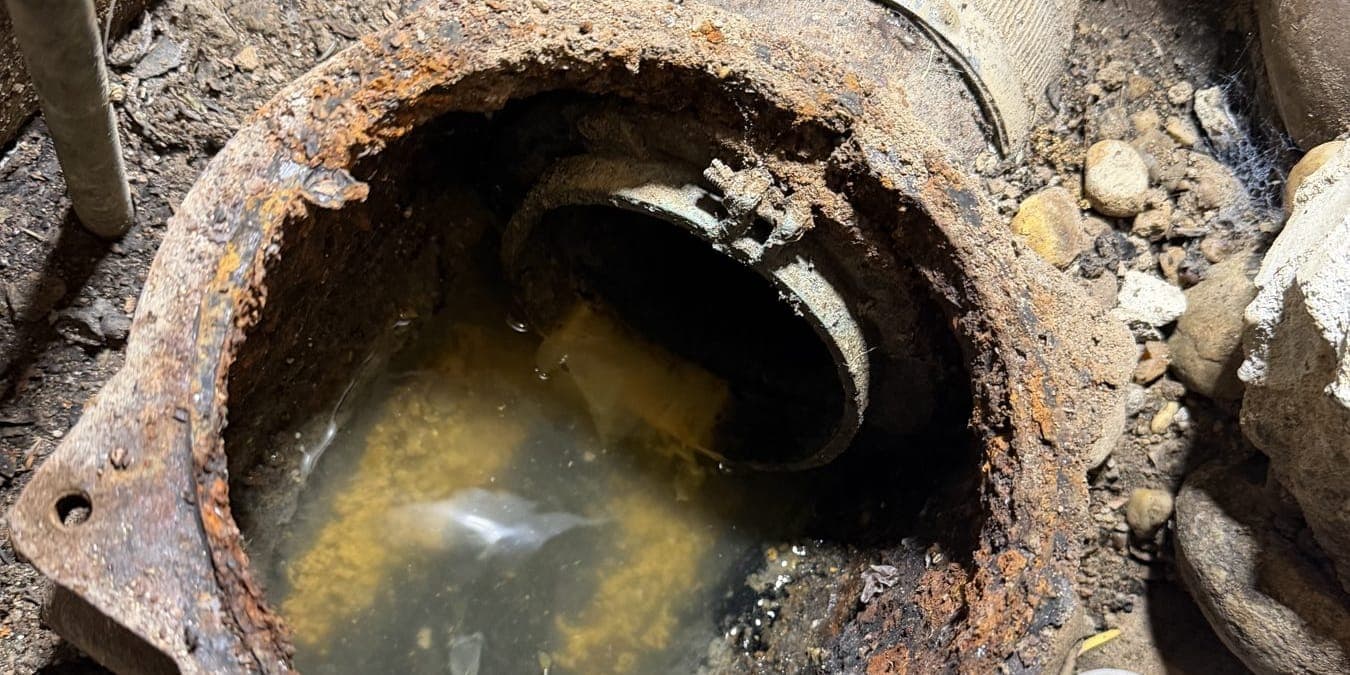
- Cast iron inside the house and under the slab rusts from the inside out. Scale narrows the pipe and catches paper. See cast iron drain pipes: descale, line or replace.
- Clay laterals come in short lengths with a joint every few feet, and each joint is a place for roots to get in or for the pipe to shift.
- Orangeburg, a tar-and-wood-fiber pipe used after the war, softens and flattens with age. We cover it in Orangeburg pipe in Long Island homes.
- Mixed repairs. Decades of patches mean a line can be cast iron, then clay, then plastic, with a transition coupling at every change.
Sand, trees and time
Long Island’s sandy soil settles, and a settling trench pulls joints out of line or lets a section sag into a “belly” that holds water and waste. The mature trees that make older neighborhoods so attractive send roots toward any joint that leaks. Read about which trees cause the most trouble.
The warning signs inside the house
- More than one drain is slow. One slow sink is usually that sink. A tub, a toilet and the basement drain all slowing together points to the main line.
- Toilets gurgle or bubble when another fixture drains, or when the washer empties. Air is being pushed back through the water because the line can’t carry the flow. Our symptom checker walks through what each sound usually means.
- Water appears at the lowest drain — a basement floor drain, a shower or the lowest toilet — when water runs elsewhere. Valley Stream’s guide notes that backups often start this way, only when laundry runs, then get worse.
- Clogs come back. If the main was snaked and backed up again weeks or months later, the cause is still in the pipe.
- Sewage odor near the cleanout, the house trap or a floor drain that has water in its trap. Other causes are covered in sewer smell in the house.
The warning signs outside
- A strip of lawn that stays soggy, or grows greener and faster than the rest, along the path of the line.
- A dip, sinkhole or sunken spot in the lawn, walkway or driveway over the pipe. Island Park’s lateral program lists a collapsed or saturated lawn as a key sign.
- A sewage smell in the yard, or gray or black water at the surface.
- Cracks in a walkway or slab that follow a straight line from the house toward the street or the cesspool.
A clog or a failing line?
| What you notice | Usually a clog | Usually the line |
|---|---|---|
| Which drains | One fixture or one bathroom | Several fixtures, especially the lowest |
| After clearing | Stays clear for a long time | Backs up again in weeks or months |
| Outside | Nothing | Soggy, sunken or smelly spot over the pipe |
| What comes out | Hair, soap, food, a toy | Roots, sand, pieces of pipe |
Sand or pipe fragments on the cable or in the trap are an important clue. Sand inside a sewer line means there is an opening somewhere for soil to get in.
What a camera inspection tells you
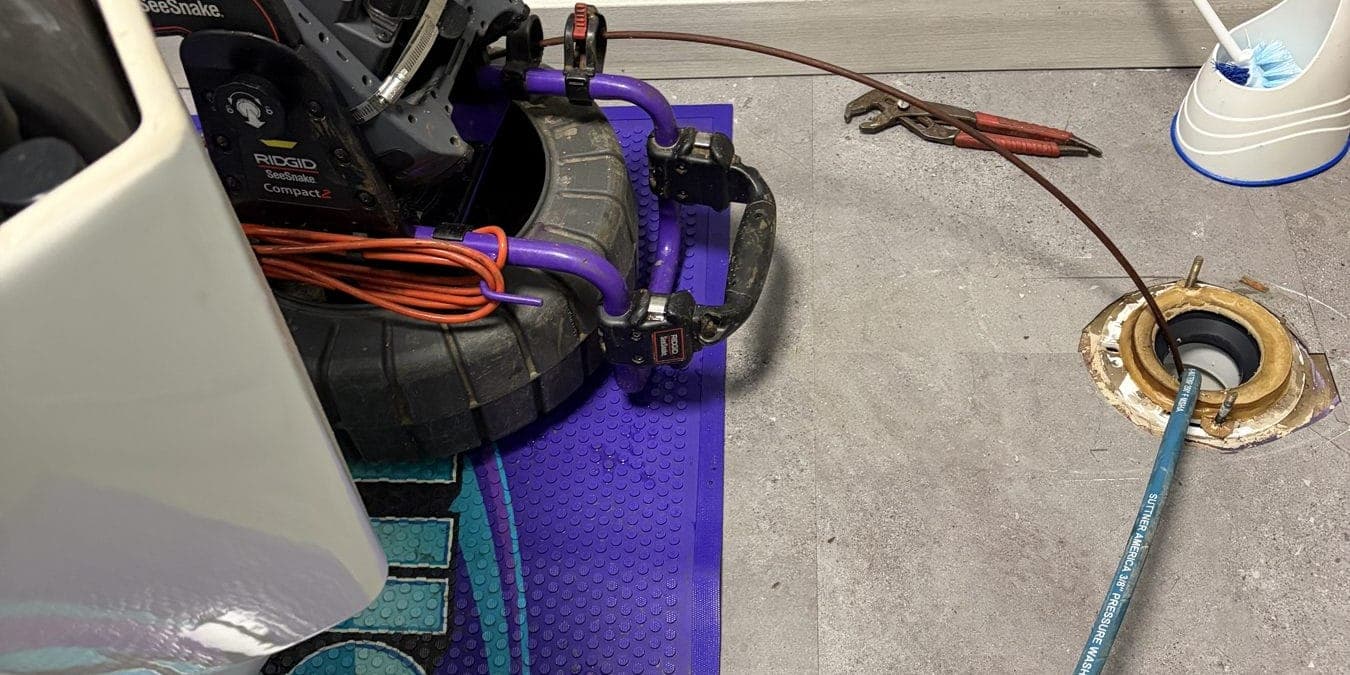
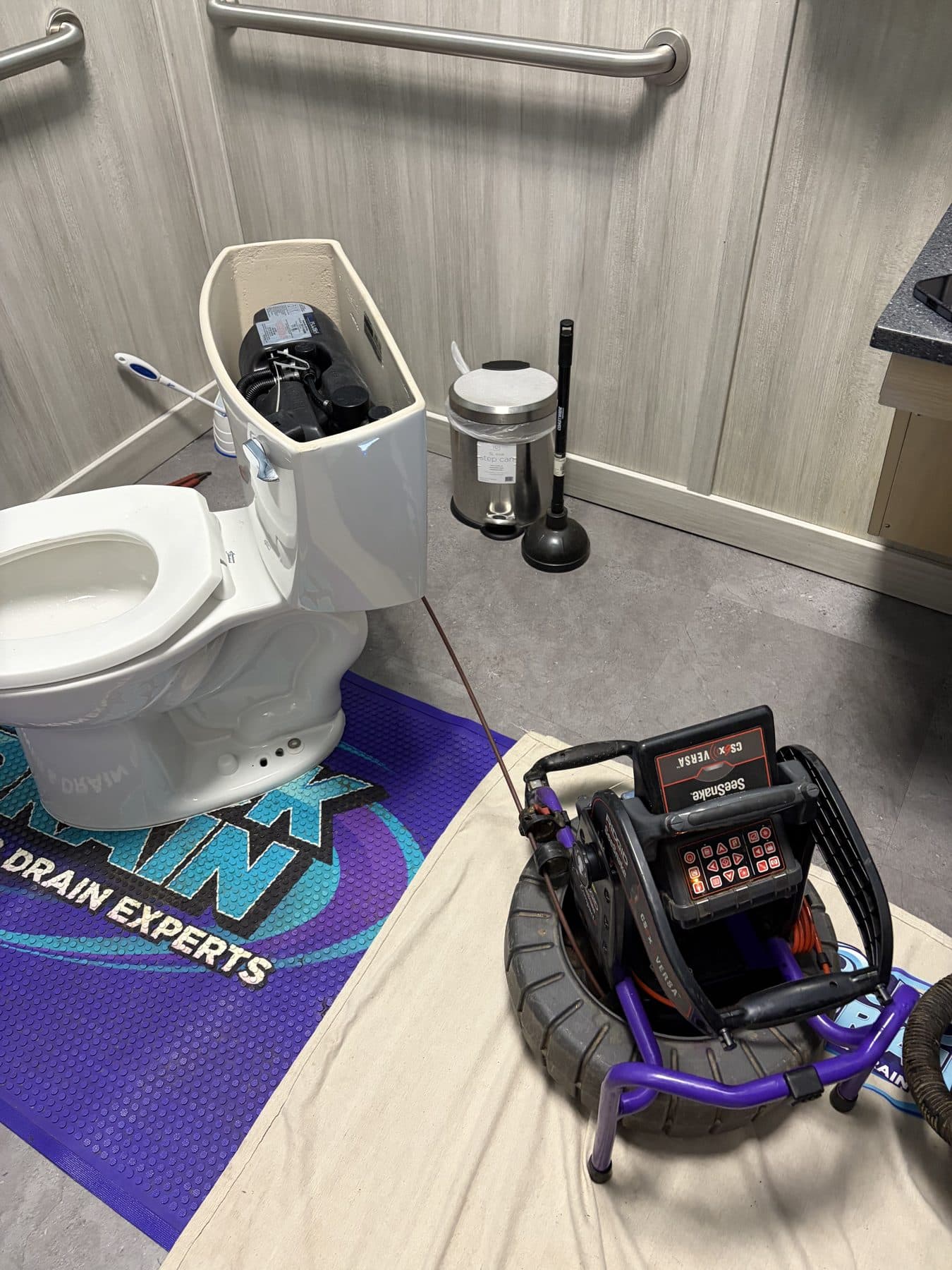
A sewer camera inspection replaces guesswork with footage. The camera goes in through a cleanout or a pulled toilet and shows the inside of the pipe all the way to the street or the system. The 512 Hz sonde behind the camera head lets us find each problem from above ground and mark its location and depth.
- Offset joints where two lengths of pipe no longer line up.
- Bellies: sagging sections that hold water.
- Cracks and holes, and the roots or sand coming through them.
- Scale and corrosion inside cast iron.
- Flattening or collapse, typical of Orangeburg.
More examples are in what a sewer camera inspection actually shows you.
The fixes, from least to most invasive
Clean it properly and keep it clean
If the pipe is sound but full of roots, grease or scale, cleaning is the fix. High pressure water jetting at 4000 PSI cleans the pipe wall to wall instead of punching a hole through the blockage, and a maintenance schedule keeps it that way.
Restore old cast iron
Pipe descaling removes the rust and scale that narrow cast iron, and the footage afterward shows whether the wall is still solid enough to keep.
Repair one section
When the camera finds one bad joint, belly or crack and the rest of the pipe is sound, a repair at that spot is often enough. The locate tells everyone exactly where to dig, which keeps the hole small.
Replace the line
When the line is failing along its length, collapsed, or Orangeburg, replacement is the lasting answer. We show you the footage and explain every option plainly, including what can wait.
What to do this week
- Find your cleanout or house trap so it can be reached quickly.
- Note which drains are slow and when: after laundry, after showers, after heavy rain.
- Keep wipes, grease and paper towels out of every drain.
- Get the line on camera before you approve a big repair. Not sure where to start? Try Diagnose my drain.
Questions we get
How long does a sewer line last?
It depends on the material, the soil, the trees and how the line was installed. Many Long Island homes built in the 1940s to 1960s still have their original pipe, and a camera inspection is the only way to see its real condition.
How do I know if it is a clog or a broken sewer pipe?
A clog usually affects one fixture and stays clear once removed. A failing line slows several drains, backs up at the lowest drain, returns weeks after cleaning, and can leave soggy or sunken spots outside. A camera confirms which it is.
Can a failing sewer line be fixed without digging up the yard?
Sometimes. Cleaning, jetting and descaling restore many lines with no digging at all, and a precise locate keeps a spot repair small. A line that has collapsed along its length usually needs replacement.
What does it cost to repair a sewer line?
It depends on what the camera finds, the depth and the access. The emergency cost calculator shows likely ranges for clearing a backup. Repairs are priced from the footage, and you approve every price before work starts.
Should I get the sewer line inspected before buying an older home?
Yes. A seller’s disclosure rarely covers the pipe under the lawn. Read buying a house on Long Island: get the sewer line inspected before you close.