A drain system is designed so sewer gas never enters the living space. Every fixture has a water-filled trap that blocks the gas, and vents carry it out through the roof. When you smell sewage indoors, one of those barriers has a gap. The job is to find which one.
First, rule out a gas leak
Natural gas has an odorant added that smells like rotten eggs, which is easy to confuse with sewer gas. If the smell is near a stove, boiler, water heater or dryer, or you have any doubt, don’t switch anything on or off. Leave the house and call your gas utility or 911 from outside.
The usual suspects
1. A dry trap
The most common cause by far. Basement floor drains, laundry drains, guest bathroom showers and rarely used sinks lose their trap water to evaporation, especially in heated, dry winter air. Once the water is gone, there is an open path from the sewer into the room.
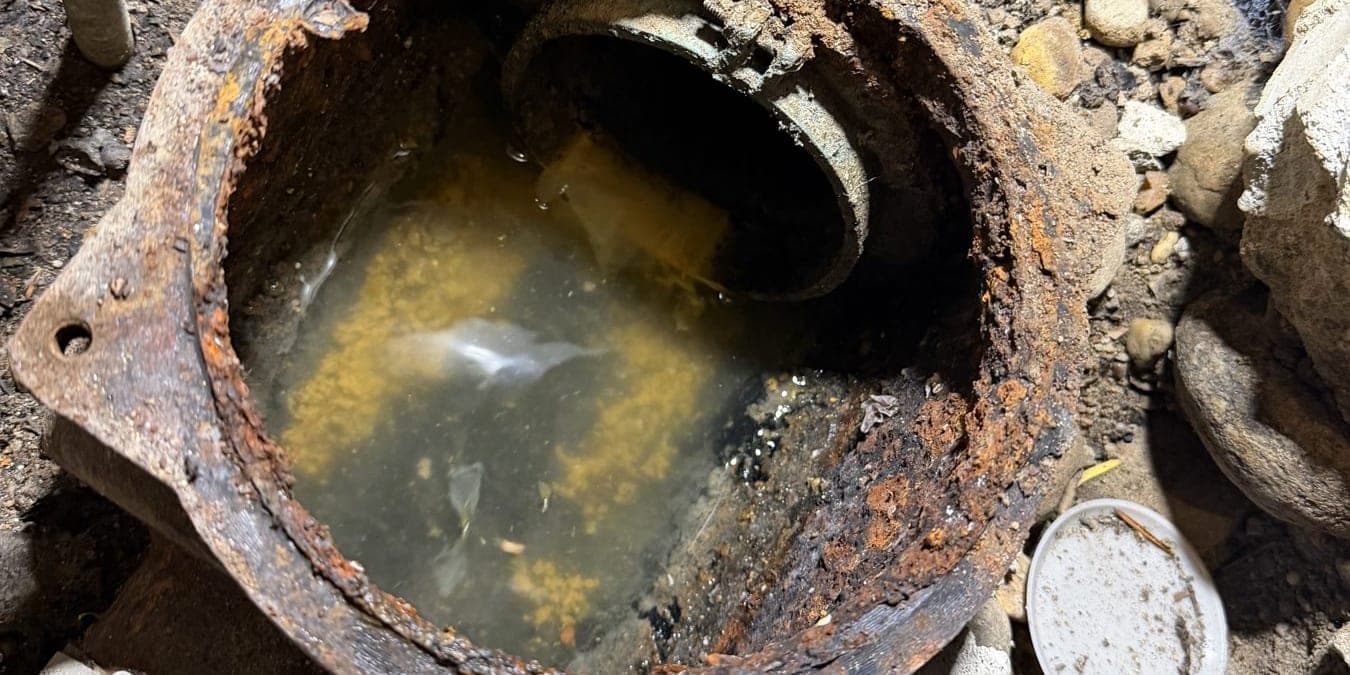
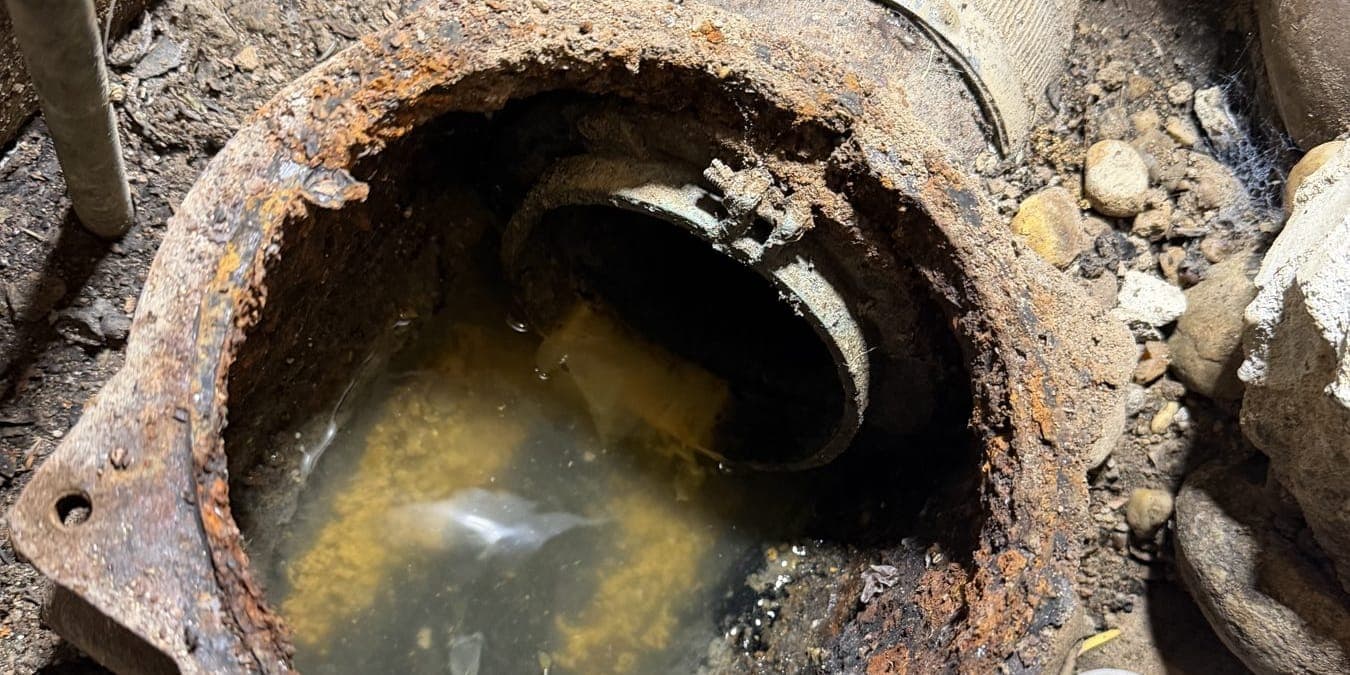
2. A loose or missing cleanout plug
Many older Long Island homes, especially in Nassau, have a house trap on the main drain in the basement, with one or two cleanout plugs on top. If a plug was left loose after the last drain cleaning, or has rusted or cracked, the street side of the system can vent straight into the basement. The same goes for any cleanout on the main line. We explain the house trap in who is responsible for the sewer lateral in Nassau County.
3. A failed toilet seal
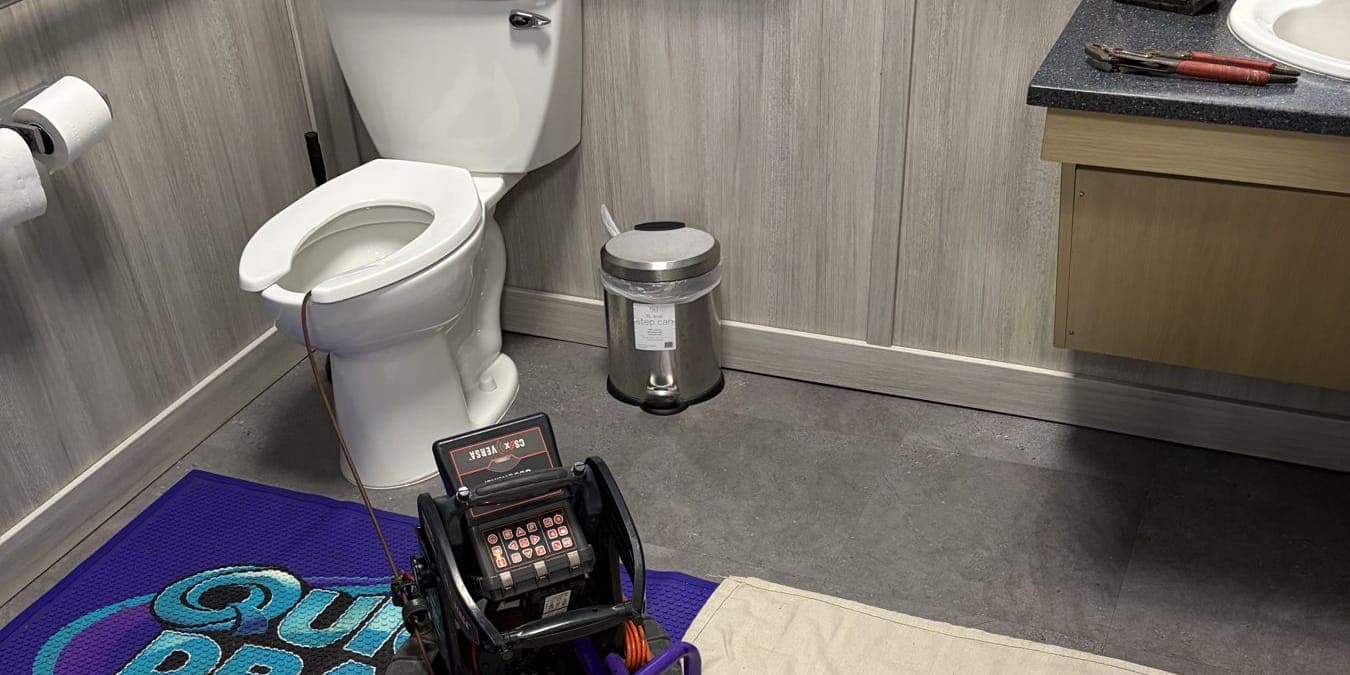
The wax ring or gasket under a toilet seals it to the drain. If the toilet rocks, was reset carelessly, or the floor has shifted, the seal can open. Signs are a smell around the base, staining on the floor or the ceiling below, or a toilet that moves when you sit on it.
4. Vent problems
Vents let air into the system so traps don’t get siphoned dry, and carry gas out above the roof. A vent blocked by leaves, a nest or frost in a hard freeze can let fixtures gurgle and pull water out of traps. A vent pipe that is cracked or disconnected inside a wall or attic releases gas indoors. Older homes sometimes have fixtures added later with no proper vent at all.
5. A cracked or corroded drain pipe
Cast iron drains in older homes rust from the inside, and a pipe can crack along the bottom or at a joint while still mostly carrying water. Smells inside a wall, behind a finished basement panel or rising from a slab are classic signs. See cast iron drain pipes in older Long Island homes.
Other things that smell like sewage
- A washing machine standpipe or utility sink without a proper trap.
- A dishwasher drain loop or air gap that lets sink water back into the machine.
- Grease and food rotting in a kitchen line or sink overflow; see grease and kitchen drains.
- A sump pit with no sealed lid, where water sits and stagnates.
- A struggling cesspool or septic system, especially when the smell is strongest outside or after heavy water use.
Checks you can do yourself
- Pour a few quarts of water into every floor drain, unused shower and rarely used sink. If the smell fades within a day, a dry trap was the cause; repeat every few weeks.
- Look at every cleanout plug on the house trap and main drain. Each should be in place and tight. Don’t open one yourself if the line might be backed up.
- Rock each toilet gently. Any movement, or staining around the base, points to the seal.
- Note when the smell appears: after laundry, when it is windy, after rain, only in one room. That pattern narrows the cause down.
- Use the symptom checker or Diagnose my drain to match the smell with other signs such as gurgling or slow drains.
When to call, and what we look for
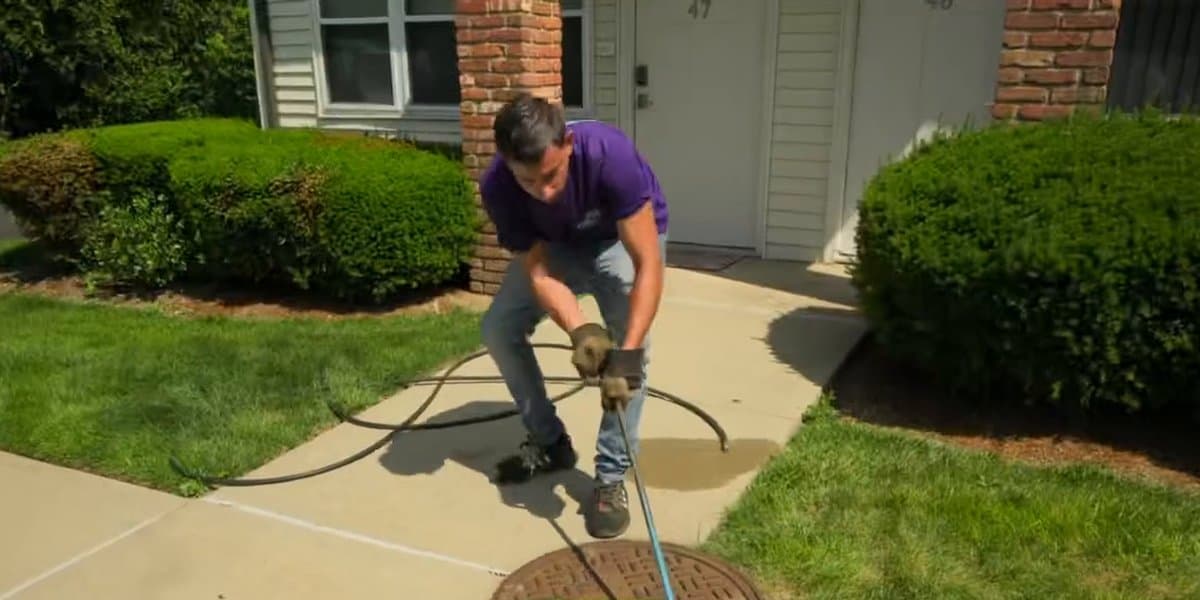
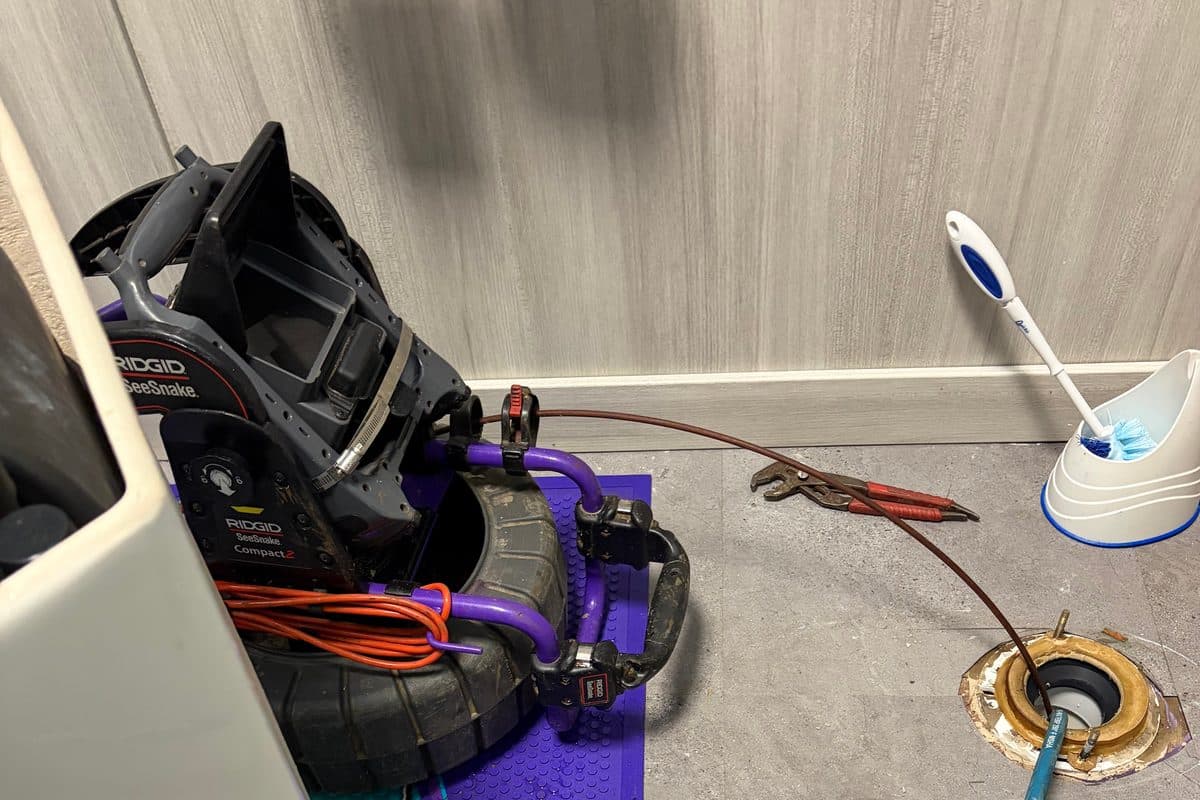
If refilling traps and checking plugs and toilets doesn’t solve it, the source is usually inside the pipes or walls. A sewer camera inspection shows cracks, corrosion, separated joints and blockages from the inside, and the 512 Hz sonde lets us mark exactly where a problem is behind a wall or under a slab, so any opening is small and in the right place.
- If the line is coated with grease or narrowed by scale, sewer line cleaning or pipe descaling removes what the odor is coming from.
- If a pipe is cracked or a joint has separated, the footage shows whether a section repair is enough.
- If you are on a cesspool or septic system and the smell is outside too, a septic and cesspool inspection checks the system and the line together.
Is sewer gas dangerous?
The faint smell from a dry trap is mostly a nuisance, but it means the barrier between your home and the sewer is open, and that should be fixed. Sewer gas in a confined space such as a pit, a manhole or a cesspool can be very dangerous. Never go into one, and keep children and pets away from open covers.
Preventing it
- Run water in every drain at least every few weeks, especially basement floor drains and guest bathrooms.
- After any drain cleaning, make sure every cleanout plug is back in and tight.
- Have a rocking toilet reset with a new seal before it leaks.
- For kitchen and laundry drains with recurring odors from organic buildup, an enzyme maintenance product such as Drain Shot Enzyme is designed for routine care.
- If you are on a cesspool or septic system, keep it pumped and keep grease and wipes out of it, as the US EPA’s septic care guidance recommends.
Questions we get
Why does my basement smell like sewage?
Most often a basement floor drain or laundry drain has a dry trap, or a cleanout plug on the house trap is loose or missing. Refill the traps with water and check the plugs. If the smell stays, have the main line inspected.
Why does my bathroom smell like sewer only sometimes?
An intermittent smell often points to a trap that is being siphoned by a vent problem, a toilet seal that opens when the toilet is used, or a smell that comes from outside on windy days through the vents. Note when it happens; that pattern narrows it down.
Is it safe to stay in a house with a sewer smell?
A faint smell from a dry trap is usually a nuisance rather than a danger, but it should be fixed. If you smell gas rather than sewage, leave and call your gas utility or 911. Never enter a pit, manhole or cesspool.
Can a cesspool or septic system cause a smell inside the house?
Yes, especially when the system is full or the line to it is partly blocked, so gas and wastewater back up. A septic and cesspool inspection checks both.
How do you find the source of a sewer smell?
Start with traps, cleanout plugs and toilets. If those are fine, a camera inspection shows cracks, separated joints and blockages inside the pipes, and a locate marks where they are. The emergency cost calculator shows likely ranges if the line is also backing up.